

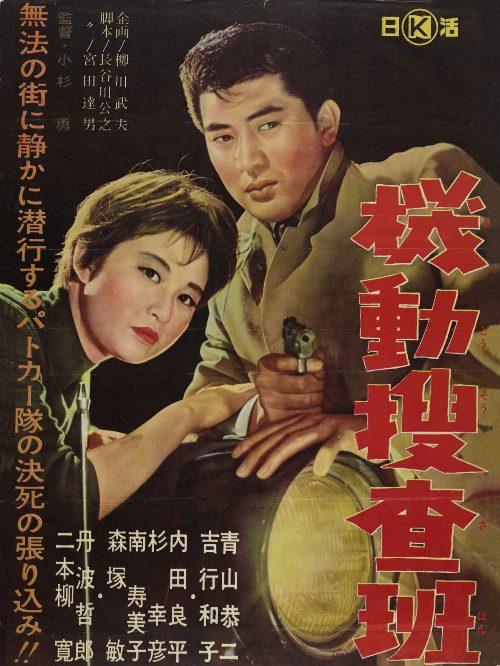
機動捜査班(1961)
About 機動捜査班
The cinematic landscape of early sixties Japan often favored grand period dramas or intimate domestic portraits, yet the 1961 release Kidō Sōsahan stands out as a gritty, urban-focused police procedural that captures the restless energy of a modernizing nation. Directed by Isamu Kosugi, the film shifts the camera away from the stylized tropes of the era to highlight the high-stakes world of mobile investigative squads. By focusing on the relentless pace of law enforcement in a rapidly evolving metropolitan environment, the movie provides a fascinating window into how Japanese crime cinema began to mirror the anxieties of a society transitioning into a technological age. It feels less like a traditional detective story and more like a visceral exploration of the friction between rapid urbanization and the individuals tasked with maintaining order on the streets.
The strength of this production lies in its ensemble cast, which features heavyweights like Tetsuro Tamba and Ryohei Uchida. Their performances ground the narrative in a sense of weary professionalism that elevates the material beyond a standard procedural. For viewers interested in the evolution of Japanese noir or those who appreciate the technical craft of mid-century police thrillers, this film offers a compelling case study. It manages to balance procedural rigor with a palpable sense of atmospheric tension, a hallmark of the period that influenced countless crime dramas across Asia and beyond. The work of Kosugi here is notable for its refusal to romanticize the job, choosing instead to emphasize the repetitive, often grueling nature of investigative work within the confines of a concrete jungle.
Modern audiences who enjoy the procedural nuances of contemporary Indian thrillers from the Malayalam or Tamil industries will likely find a familiar rhythm in the way this film handles its investigation. Much like the current wave of gritty realism found in regional Indian cinema, Kidō Sōsahan prioritizes the systematic piecing together of evidence over flashy heroics. It serves as an essential watch for cinephiles who want to see the roots of the modern police procedural, demonstrating that the formula of the focused, street-level investigator is a universal language. Whether it is the stark cinematography or the sharp, no-nonsense dialogue, the film remains a potent example of how regional storytelling can capture the essence of a decade. It is a taut, efficient piece of filmmaking that remains relevant for anyone tracking the history of global crime narratives.