

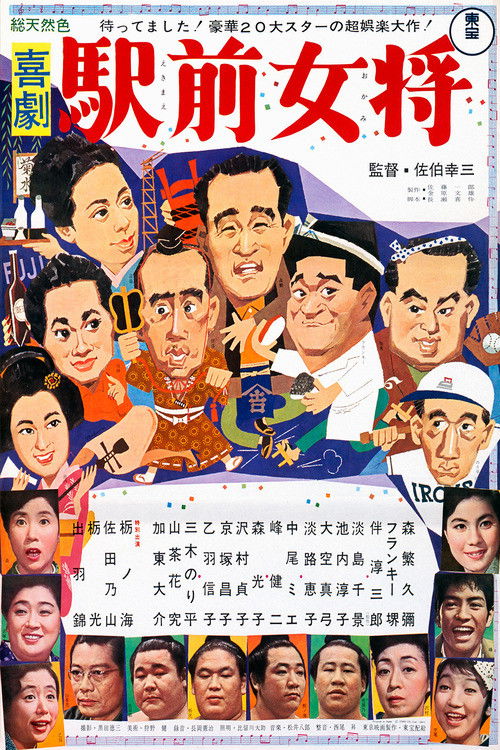
A Comedy in Front of the Station: Landlady(1964)
About A Comedy in Front of the Station: Landlady
Seventh in the Ekimae series, detailing the exploits of the landladies around Ryogoku Station in Tokyo, and their sumo clientele.
Stepping into the mid-sixties urban landscape of Tokyo, A Comedy in Front of the Station: Landlady captures a distinct slice of Japanese social history that resonates with the same vibrant, ensemble-driven energy found in the best of contemporary Indian neighborhood comedies. This installment of the prolific Ekimae franchise shifts the spotlight toward the matriarchal figures managing boarding houses near the bustling Ryogoku district. By centering the narrative on the domestic and professional power dynamics of these landladies, the film offers a humorous lens through which to view the intersection of traditional sumo culture and the rapidly modernizing cityscape. Much like the regional family dramas that define the golden age of Malayalam or Tamil cinema, this feature relies heavily on the charisma of its ensemble cast, using character-driven friction to drive the humor rather than relying on high-concept gimmicks.
The film serves as a fascinating time capsule for viewers who appreciate the intricate social hierarchies inherent in mid-century Japanese comedy. The inclusion of professional sumo wrestlers as the primary clientele provides a unique backdrop that mirrors the way Indian cinema often weaves local sports or regional professions into the fabric of everyday life. Performers like Hisaya Morishige and Frankie Sakai anchor the production with a rhythmic, theatrical style of delivery that will feel familiar to fans of classic slapstick traditions. Their ability to balance the eccentricities of their characters with the genuine warmth of a tight-knit community is what gives the series its enduring appeal. It is not merely a collection of gags; it is an observation of a bustling transport hub that acts as a microcosm for the nation at large.
Audiences who enjoy character-led narratives where the environment is as vital as the protagonist will find much to admire here. The film functions as a masterclass in managing large casts, ensuring that every individual in the boarding house has a distinct voice and motivation. For those looking to explore the lineage of Japanese comedic cinema, this work serves as an essential bridge between the post-war recovery era and the high-growth period that followed. It is positioned as a lighthearted yet observant piece that prioritizes human connection over grand spectacle. Whether you are a scholar of international film history or simply a fan of ensemble comedies that capture the spirit of a specific time and place, this classic offers a charming and insightful glimpse into the lives of those who kept the gears of Tokyo turning while the rest of the world watched the sumo matches.



