
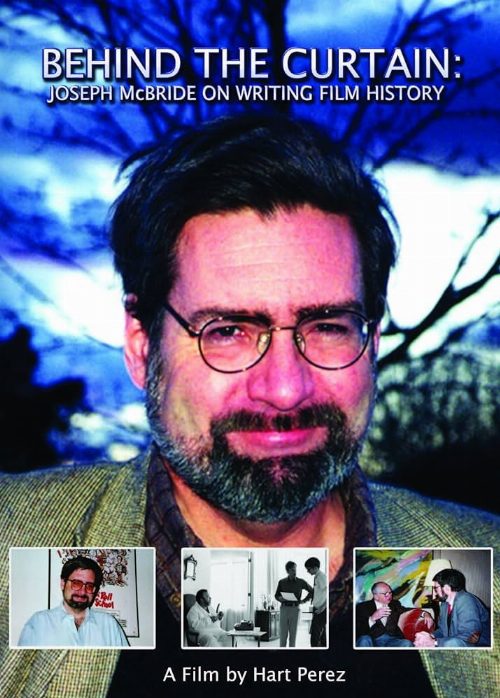
Behind the Curtain: Joseph McBride on Writing Film History(2011)
About Behind the Curtain: Joseph McBride on Writing Film History
The documentary feature film BEHIND THE CURTAIN: JOSEPH McBRIDE ON WRITING FILM HISTORY (2011) presents McBride’s thoughts and memories as a biographer of celebrated film directors and as a film critic, historian, screenwriter, and teacher. McBride’s biographies of Frank Capra, John Ford, and Steven Spielberg are among the landmarks in the field. McBride is renowned for his prodigious research, his keen film analysis, and his rare ability to connect the personalities of filmmakers with their work and their times.
Exploring the architectural blueprint of cinematic legacy often requires a guide who understands both the art of storytelling and the mechanics of historical inquiry. In the documentary Behind the Curtain, we are invited into the intellectual workspace of Joseph McBride, a figure whose career has been defined by his exhaustive efforts to map the lives of legendary auteurs. Rather than a dry academic lecture, this project functions as a masterclass in the craft of film biography, positioning McBride as both a subject and a mentor. By examining his rigorous approach to dissecting the careers of icons like Orson Welles and John Ford, the film offers viewers a rare glimpse into the detective work necessary to peel back the layers of Hollywood mythology.
For audiences accustomed to the high-octane narratives of contemporary Indian cinema, where the persona of a director is often as mythologized as the star, this documentary provides a fascinating counterpoint. It highlights the transition from casual fandom to critical scholarship, a shift that resonates with the growing global interest in the behind the scenes evolution of film history. While the industry in regions like Hyderabad or Mumbai often prioritizes the spectacle of the finished product, McBride’s work serves as a reminder that the true soul of a movie lies in the intersection of personal struggle and creative impulse. It is an essential watch for cinephiles who are not just interested in what happens on the screen, but in the complex, often contradictory motivations of the individuals who put it there.
Those who appreciate the investigative depth found in long-form journalism or literary biographies will find themselves deeply engaged by this narrative. McBride brings a sharp, analytical perspective that avoids the trap of hagiography, instead opting for a balanced interrogation of his subjects. His history as a screenwriter and educator shines through, as he translates complex historical nuances into accessible, compelling observations. By focusing on his methodology, the film encourages a more discerning way of watching movies, urging us to look past the surface of the moving image to understand the cultural and personal pressures that shaped it. It is a thoughtful exploration of how one man’s dedication to archival truth has fundamentally altered our collective understanding of the medium, making it a mandatory addition to the library of any serious student of global cinema.