
Bhagat Dhanna Jatt(1974)
About Bhagat Dhanna Jatt
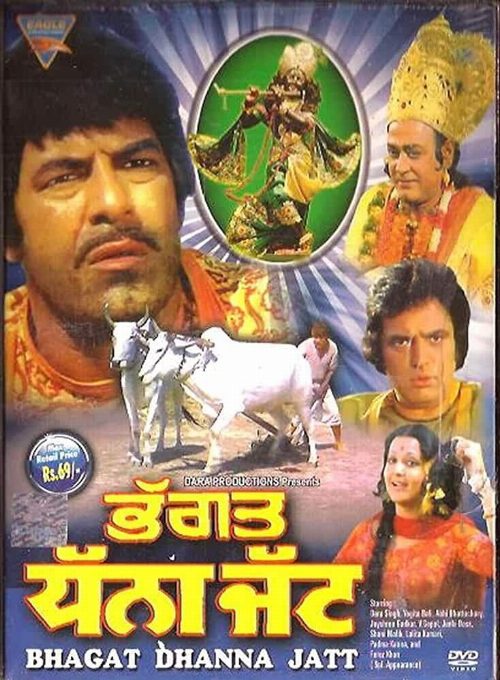
When Laali, who loves Shyamu, refuses to marry Kalidas, recommended by her aunt, her naive brother, Dhanna, and Bhabhi, Bhagwanti, are asked to leave and till a barren piece of land. When Dhanna is unable to grow anything, he decides to take the assistance of Thakara, none other than Bhagwan Shri Vishnu. He approaches Pandit Tirlochan in order to take the Diety to his residence. Tirlochan cons him by giving him a rock instead, and he brings it home, refuses to feed himself until and unless the Thakara shares his humble offerings. As a result, the entire community, including Laali and Bhagwanti, think Dhanna has lost his mind.
The 1974 Punjabi cinematic landscape offers a fascinating glimpse into the fusion of folklore and domestic drama through the lens of Bhagat Dhanna Jatt. Unlike the modern high-octane action spectacles that frequently dominate Indian box offices today, this production anchors itself in the simplicity of faith and the rural struggles of a bygone era. The narrative centers on a protagonist whose earnest, almost childlike devotion drives the plot forward, contrasting sharply with the cynical pragmatism of the villagers surrounding him. By focusing on a man who navigates familial exile and agricultural hardship with an unshakable spiritual conviction, the film occupies a unique space in Punjabi cinema, bridging the gap between historical biography and moral fable.
The story follows a man named Dhanna who, after being cast out alongside his sister-in-law, faces the daunting task of cultivating desolate soil. His decision to seek divine intervention when traditional farming methods yield nothing serves as the catalyst for a series of events that test his sanity and resolve. The brilliance of the film lies in how it frames the protagonist’s interactions with a stone idol, which he sincerely believes to be a manifestation of the divine. This premise allows the audience to witness a character study of pure faith, as the community observes his refusal to eat without sharing his meals with the deity, leading to inevitable tension and social ridicule. The performance of the lead cast helps maintain a grounded tone, ensuring that the mystical elements never overshadow the emotional stakes of the family unit.
Viewers who enjoy films that explore the intersection of traditional religious devotion and personal integrity will find this a compelling watch. It is particularly suited for those interested in the evolution of regional Indian storytelling, as it highlights the cultural importance of legendary figures who have been woven into the fabric of Punjabi identity for generations. While the pacing reflects the deliberate style of 1970s filmmaking, the thematic weight of the narrative remains resonant. The production stands as a testament to a period when regional industries were deeply invested in preserving cultural narratives, offering a heartfelt exploration of whether unwavering belief can truly alter one’s material reality. For fans of classic Indian cinema, it serves as a nostalgic look at how mythology was translated into visual storytelling long before the advent of modern digital effects.