About Blue Moon
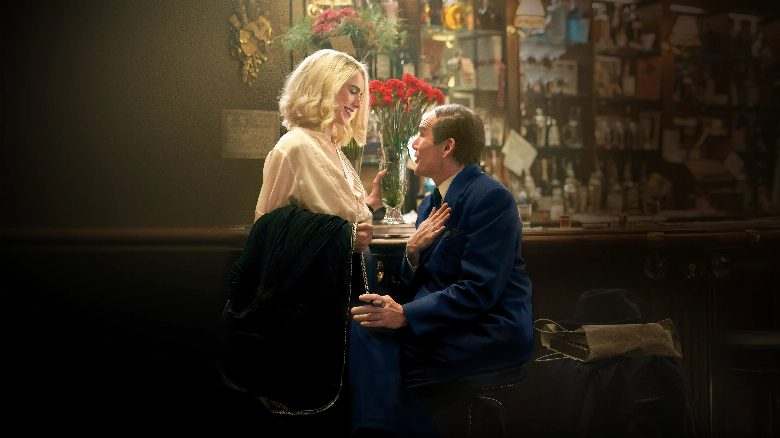
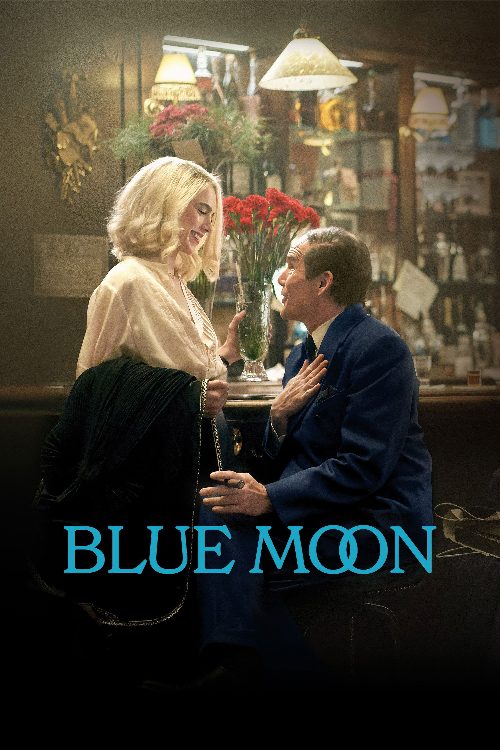
On the evening of March 31, 1943, legendary lyricist Lorenz Hart confronts his shattered self-confidence in Sardi’s bar as his former collaborator Richard Rodgers celebrates the opening night of his ground-breaking hit musical “Oklahoma!”.
The intersection of artistic triumph and personal fragility provides the dramatic bedrock for Blue Moon, a poignant period piece that arrives at a moment when audiences are increasingly drawn to the melancholic realities behind mid-century creative legends. By centering the narrative on the final, turbulent hours of the iconic lyricist Lorenz Hart, the film ventures into the bittersweet geography of professional separation and the quiet erosion of identity. While Richard Rodgers basks in the monumental success of the debut of Oklahoma, the story chooses to linger in the shadows of a tavern, contrasting the public electricity of a theatrical milestone with the private dissolution of a partnership that defined the Great American Songbook. It is a sophisticated character study that avoids the tropes of a traditional musical biopic, opting instead for an intimate, psychological exploration of what happens when a creative engine stalls while its counterpart accelerates toward immortality.
Director Richard Linklater brings a distinct sensibility to this project, utilizing his signature penchant for naturalistic dialogue and temporal precision to capture the weight of a singular evening. The casting of Ethan Hawke as the unraveling Hart suggests a performance rooted in vulnerability and intellectual exhaustion, while the presence of Margaret Qualley and Andrew Scott hints at a rich, layered supporting ensemble that rounds out the period atmosphere. For viewers who appreciate the slow-burn intensity of films like The Master or the backstage introspection of Birdman, this drama offers a rare look at the human cost of legacy. It positions itself as a cerebral alternative to more conventional historical dramas, prioritizing the internal landscape of its subjects over the glitz of the era.
This film feels particularly relevant in an industry currently obsessed with deconstructing the myths of cultural icons, moving away from glossy tributes toward more honest, flawed portraits. Its focus on the tension between two men who fundamentally altered the trajectory of theater makes it a must-watch for those interested in the history of the arts or the complexities of long-term artistic collaborations. As it navigates the friction between the celebratory atmosphere outside the bar and the unraveling psyche within, the movie promises to be a haunting examination of success that arrives too late or in the wrong company. It is a thoughtful, evocative piece that invites the audience to consider the ghosts that haunt every success story, making it a standout entry for those who prefer their cinema to be as emotionally resonant as it is historically grounded.
Cast(15)