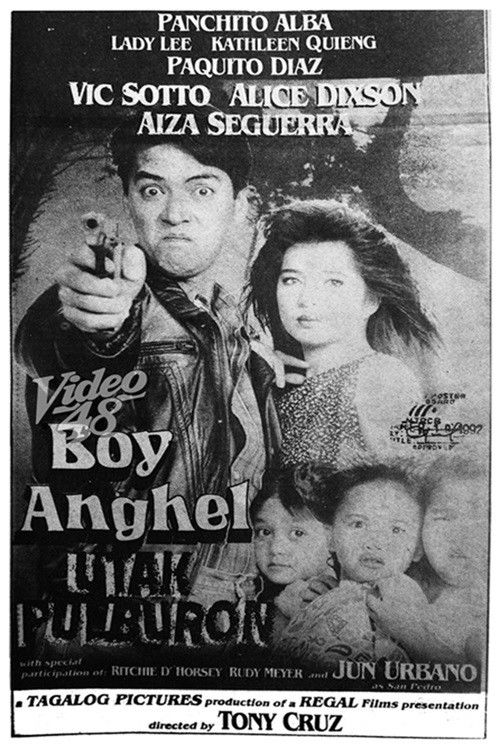
About Boy Anghel: Utak Pulburon
A minion named Anghel had been working with boss in order to prevent himself from police.
The Philippine action comedy Boy Anghel Utak Pulburon captures a specific slice of nineties cinema that defined the career of Vic Sotto during his transition into a solo comedic powerhouse. Rather than leaning into the grim aesthetic often associated with crime dramas of that era, the film opts for a lighter touch, positioning its protagonist as a small-time associate desperately attempting to evade law enforcement through a series of mishaps. It fits perfectly into the broader Southeast Asian trend of the early nineties where high-stakes underworld narratives were frequently punctured by slapstick humor, allowing audiences to engage with tense situations through a familiar, comedic lens. This cultural pivot toward the comedic underworld reflected a desire for escapism, blending the grit of urban survival with the charismatic, lighthearted persona that Sotto had cultivated across his long-running television and film projects.
What makes this production stand out is its reliance on the chemistry between the core ensemble rather than just the intensity of its stunt sequences. By pairing Sotto with Ritchie D Horsie and a young Ice Seguerra, director Tony Cruz crafts a dynamic that feels more akin to a family-oriented misadventure than a traditional gangster flick. The inclusion of Alice Dixson adds a layer of romantic tension and narrative grounding that balances out the more frantic comedic beats. For viewers who appreciate the golden age of Philippine studio comedies, this film acts as a quintessential time capsule, demonstrating how local cinema effectively repurposed Hollywood genre tropes to suit the sensibilities of a domestic audience that craved both thrills and relatable laughter.
This movie is an ideal watch for those interested in the evolution of Filipino pop culture and the specific brand of humor that dominated local box offices three decades ago. It serves as a reminder of a time when the star power of figures like Sotto could carry a project across multiple genre lines, seamlessly jumping from physical comedy to suspenseful chase scenes. While it does not reinvent the tropes of the criminal underworld, its distinct charm lies in the playfulness of its lead performance and the chaotic energy that only this particular era of regional filmmaking could produce. Whether you are a dedicated fan of nineties nostalgia or a student of international cinema, the film offers a window into the creative strategies that kept the industry vibrant during a period of significant transition for the Philippine entertainment landscape.
Cast(4)



Crew
Screenplay
Director
Executive Producer
Supervising Producer
Music
Director of Photography
Editor
Production Design
Art Direction
Similar Films