
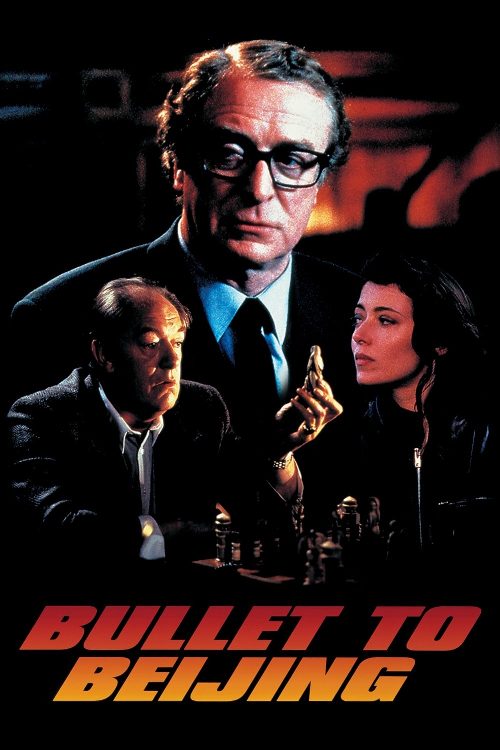
Bullet to Beijing(1995)
About Bullet to Beijing
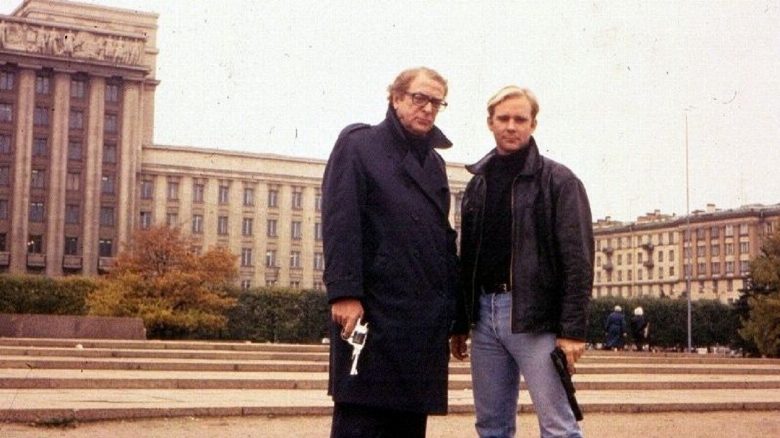
When long-time British agent Harry Palmer loses his job because the Cold War is over, he's promptly approached by a Russian bossman, Alex. In St. Petersburg Alex tells Harry of his plan for Russia's future, which is threatened because a deadly biochemical weapon called the Red Death has been stolen from him. He'll pay Harry handsomely to retrieve it. An ex-spy friend tips Harry off that it's being sent to Beijing by train, aboard which we begin to learn whose side everyone's really on.
The post-Cold War era brought a specific kind of existential crisis to the spy genre, and Bullet to Beijing captures that transition with a gritty, cynical charm that feels distinct from the polished glamour of contemporary blockbusters. By centering on a protagonist whose professional utility has evaporated alongside the Berlin Wall, the film functions as a bridge between the classic espionage tropes of the mid-twentieth century and the more chaotic, privatized geopolitical landscape that followed. It is a fascinating relic of mid-nineties television cinema, where the focus shifts from grand state-sponsored missions to the desperate, murky dealings of individuals operating in the shadows of a collapsing empire. The narrative follows Harry Palmer, a figure defined by his weary competence, as he navigates a landscape where his traditional skill set is both a liability and his only currency.
For viewers who appreciate the slow-burn tension of classic thrillers like The Ipcress File, this film serves as a compelling epilogue to a storied career. Director George Mihalka leans into the atmospheric gloom of St. Petersburg and the claustrophobic confinement of long-distance rail travel to heighten the stakes. Unlike the high-tech, gadget-heavy spectacles that dominate today, this story relies heavily on the psychological interplay between characters whose allegiances are as shifting as the borders they cross. It is a character-driven thriller that prizes dialogue and suspicion over explosive set pieces, making it an ideal choice for audiences who prefer their spy stories served with a healthy dose of geopolitical disillusionment and weary, hard-boiled wit.
This project is particularly notable for how it handles the obsolescence of its lead. By placing an established operative in a world that no longer requires his services, the film taps into a universal anxiety about professional identity and the feeling of being left behind by history. It stands out in the broader landscape of action-thrillers by eschewing the typical heroics of its time in favor of a melancholic, world-weary tone. While the global film industry, including the vibrant markets of India, continues to produce high-octane espionage dramas, this particular production remains a quintessential example of how the genre evolved to address the vacuum left by the end of the global superpower standoff. It is a thoughtful, restrained piece of work that rewards those who enjoy seeing a familiar archetype pushed into an unfamiliar and significantly less hospitable world.
Cast(34)