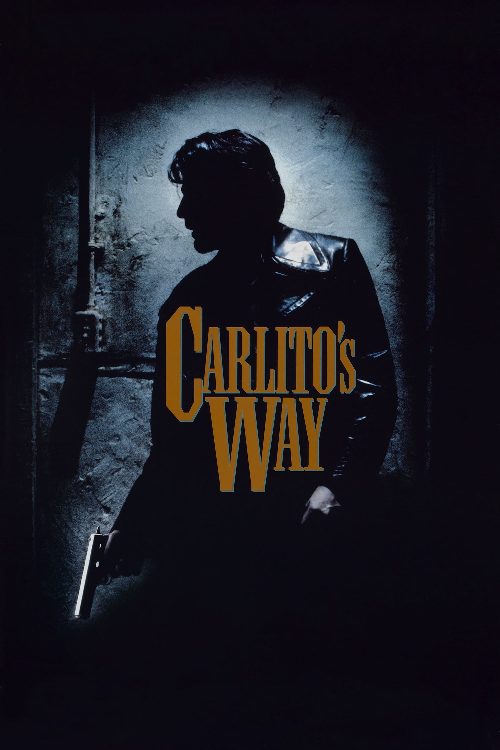
Carlito's Way(1993)
About Carlito's Way
Free after years in prison, Carlito Brigante intends to give up his criminal ways, but it's not long before the ex-con is sucked back into the New York City underworld.
Few cinematic portraits capture the exhaustion of a man trying to outrun his own shadow quite like the 1993 classic Carlito's Way. Directed by Brian De Palma, this film serves as a masterclass in atmospheric tension, presenting a protagonist who desperately yearns for a clean slate yet finds himself tethered to a world he has already outgrown. While many crime dramas revel in the glorification of street life, this narrative leans into the melancholy of transition, focusing on the heavy price of past allegiances. For audiences accustomed to the high-stakes emotional turbulence found in contemporary Indian cinema, where protagonists often navigate the complex intersection of family honor and systemic corruption, this film offers a fascinating Western parallel. It echoes the thematic weight of gritty urban dramas seen in the Hindi or Tamil industries, where the lead character is trapped by the gravitational pull of their own reputation.
The strength of the film lies in the electric chemistry between Al Pacino and Sean Penn, whose performances anchor the frantic energy of the New York City underworld. Pacino delivers a nuanced, weary turn that stands in stark contrast to his more explosive roles, portraying a man whose primary motivation is no longer power, but simple survival and a chance at a different life. Beside him, Penn provides a volatile, transformative performance that keeps the narrative perpetually on edge. This is a must-watch for cinephiles who appreciate character-driven storytelling where the environment acts as a secondary character, closing in on the lead with every passing scene. The direction emphasizes a sense of inevitability that fans of auteur-driven filmmaking, particularly those who follow the works of directors known for their visual flair and psychological depth, will find deeply compelling.
For viewers who enjoy stories that examine the difficulty of redemption in a society that refuses to let people change, this remains an essential viewing experience. It avoids the tired tropes of the genre by focusing on the psychological erosion caused by a lifetime of violence. As the plot unfolds, it becomes clear that the film is less about the mechanics of crime and more about the fragility of hope when surrounded by individuals who have no interest in reform. Whether you are a devotee of classic Hollywood crime sagas or someone exploring the evolution of the genre, this film offers a timeless study of ambition and the haunting reality of consequences. It stands as a poignant reminder that even when a person decides to walk away, the architecture of their past often dictates the path ahead.
Cast(99)