About Confession
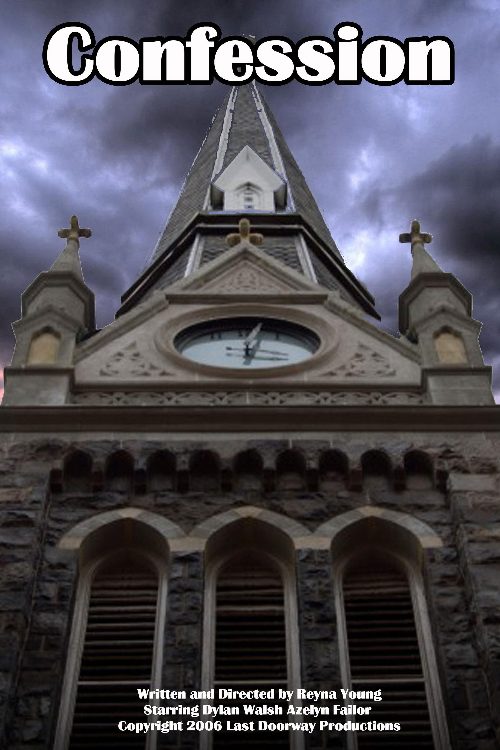
A man goes into a church to confess to a priest of all the sins he has committed while having flashbacks of killing one of his victims.
The haunting stillness of a sanctuary serves as the backdrop for a psychological descent in the 2006 horror feature Confession. While modern audiences are accustomed to high-octane supernatural thrills, director Reyna Young opts for a stripped-back approach that prioritizes the internal rot of a conscience rather than external jump scares. By centering the narrative on a man seeking absolution within the walls of a church, the film transforms a traditional religious setting into a claustrophobic trap where the weight of past atrocities becomes a tangible antagonist. This choice of environment provides a stark contrast to the chaotic, blood-soaked memories that plague the protagonist, effectively grounding the horror in the human experience of guilt rather than the purely spectral.
For followers of indie horror, this project occupies an interesting space within the mid-2000s landscape, moving away from the slasher tropes that dominated the era to explore a more somber, character-driven tension. Fans of psychological character studies who appreciate minimalist storytelling will find the film’s focus on performance compelling. The interaction between the confessor and the priest acts as the engine for the story, driving a relentless interrogation of morality and the possibility of redemption for those who have crossed irrevocable lines. It is a film that demands patience, rewarding viewers who are interested in the slow build of dread rather than rapid-fire pacing.
While Indian cinema has seen a recent surge in high-concept psychological thrillers that utilize religious motifs to explore trauma, Confession offers a different texture of storytelling that resonates with those who enjoy exploring the darker corners of the human psyche. The film captures a particular brand of existential unease that has become a touchstone in independent filmmaking, where the horror is not found in the shadows of a haunted house but in the mirror of one’s own deeds. Those who enjoy narratives that challenge their perception of the villain versus the victim will likely find the dynamic between the lead characters fascinating. It remains a notable example of how a singular, confined location can be leveraged to create an atmosphere of oppressive psychological weight, making it a worthy addition to the watchlists of horror enthusiasts who value atmosphere over spectacle.