About Crimewave
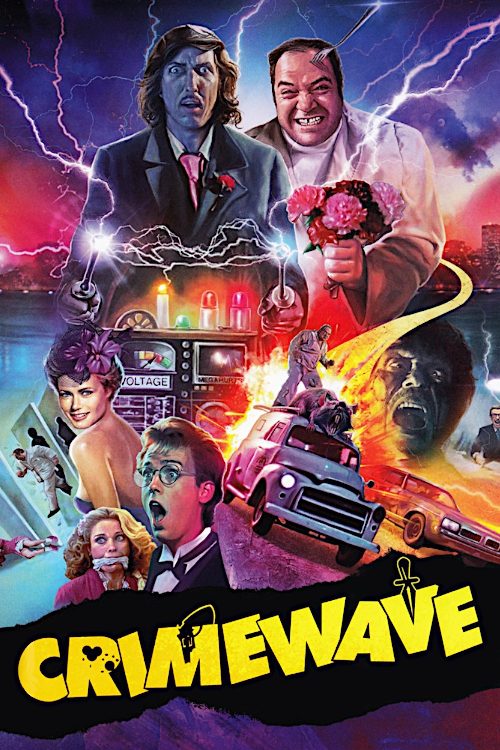
Fed up of his business partner, Ernest Trend hires the services of two exterminators. When things go drastically wrong and they murder the wrong man, the race is on to frame an innocent video surveillance man.
Sam Raimi burst into the mid-eighties independent film scene with a manic energy that redefined how genre audiences viewed low-budget dark comedies. Crimewave serves as a fascinating historical bridge between the raw, visceral terror of his earlier work and the slicker, more stylized slapstick that would eventually define his Hollywood career. While many viewers today associate the director with massive blockbusters, this specific project highlights his roots in a tradition of physical humor and exaggerated cartoonish violence that feels surprisingly relevant when compared to the bold, experimental tonal shifts currently seen in contemporary Indian black comedies. The narrative centers on a business partnership gone sour, triggering a series of absurd errors that spiral out of control when two eccentric hitmen bungle an assassination.
The film operates as a vibrant collision of retro aesthetic sensibilities and structural chaos, making it an essential watch for those who appreciate the evolution of cult cinema. By casting the narrative through the lens of a frame job involving an unsuspecting technician, the story leans heavily into the absurdity of human error rather than traditional suspense. It is precisely this relentless pace and commitment to visual gags that distinguishes the production from its more somber peers of the era. Fans of directors who enjoy blending horror elements with high-octane farce will find a familiar spirit here, as the film refuses to take its own premise seriously, opting instead for a frantic, almost theatrical presentation that prioritizes kinetic movement over grounded realism.
For audiences accustomed to the genre-bending narratives emerging from current international circuits, this early effort offers a masterclass in how to sustain a bizarre premise through sheer creative force. It is not merely a crime story but a stylistic exercise that tests the boundaries of what a comedy can look like when stripped of traditional narrative constraints. Those who gravitate toward the works of filmmakers who treat the screen like a living comic book will likely find this experience deeply rewarding. It stands as a testament to a time when imaginative constraints forced creators to innovate with camera angles and editing rhythms, resulting in a project that remains distinctively eccentric nearly four decades later. Whether you are a scholar of independent film history or simply someone seeking a break from the standard tropes of modern thrillers, the film provides a chaotic, unpredictable journey that captures the singular vision of its creators at a pivotal moment in their artistic development.
Cast(32)