

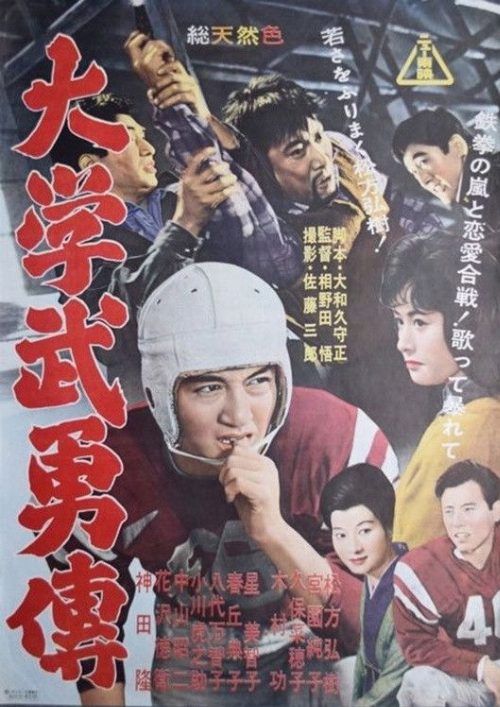
Daigaku buyū-den(1961)
About Daigaku buyū-den
1961 Japanese movie
Stepping back into the landscape of early sixties Japanese cinema reveals a fascinating intersection of academic tradition and the shifting social tides of post-war youth culture. Daigaku buyuden serves as a distinct time capsule, capturing the restless energy of the university experience during a period when the country was rapidly reinventing its national identity. While many international audiences currently look toward the bold stylistic choices of modern Japanese thrillers or the quiet intimacy of contemporary dramas, this film offers a bridge to a formative era of studio-driven storytelling. It functions as a mirror to the societal pressures placed on young adults navigating the transition from structured school life into the complexities of a professional future, a theme that resonates just as strongly in modern Indian cinema where the battle between tradition and personal ambition remains a central narrative pillar.
The film relies on a balanced ensemble cast, featuring established talents like Hiroki Matsukata and Isao Kimura, whose performances provide the necessary gravitas to ground the more spirited elements of the plot. Under the direction of Satoru Ainoda, the production avoids the trap of becoming a mere melodrama, instead opting for a narrative that examines the internal hierarchies and competitive spirits found within the ivory tower. For viewers who appreciate the classics of the golden age, this piece offers a compelling look at how Japanese studios handled themes of camaraderie and mentorship before the rise of the high-concept blockbusters that would eventually dominate the global market. It captures a specific brand of earnestness that is rarely seen in today’s cynicism-laden media landscape.
This project is an essential watch for cinephiles who seek to understand the lineage of the campus drama. By focusing on the interplay between individual character growth and the rigid expectations of the time, the movie invites the audience to consider how institutional settings shape the human spirit. It stands out by resisting the urge to simplify its characters, choosing instead to explore the messy nuances of loyalty and personal development. Whether one is a devotee of classic international cinema or a curious follower of historical trends, this film provides a thoughtful examination of the struggles that define the early years of adulthood. It remains a notable entry for those who value character-driven narratives that prioritize human connection over spectacle, maintaining its relevance for anyone interested in the evolution of the coming-of-age genre across international borders.