
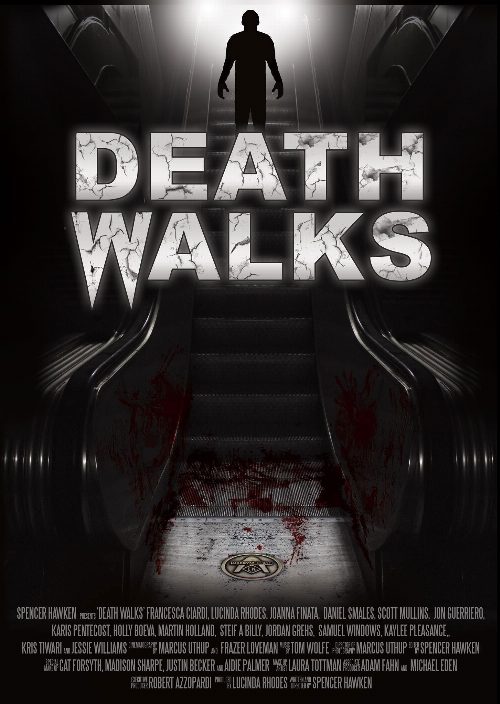
About Death Walks
One November evening a late night visitor to a shopping centre brings about a chain reaction of events that lead to a full scale invasion. Have the undead risen from the grave, or is it something far more sinister?
The familiar hum of a retail hub after hours creates an eerie backdrop for Death Walks, a 2016 horror feature that strips away the glitz of typical genre entries to focus on the raw mechanics of survival. Director Spencer Hawken chooses an unconventional canvas for his narrative, turning the sterile, fluorescent-lit corridors of a shopping center into a claustrophobic trap. While many contemporary horror films lean heavily on bloated budgets and excessive digital artifice, this production relies on the unsettling interplay between mundane commercial architecture and a sudden, inexplicable shift in reality. It captures the psychological weight of isolation, where the absence of a crowd turns a place of consumer convenience into a labyrinthine nightmare of uncertainty.
Within the landscape of independent horror cinema, this film stands out by embracing a lo-fi intensity that forces the audience to engage with the characters rather than just the spectacle of the threat. The pacing is designed to cultivate a slow-burn dread, questioning whether the encroaching danger is a supernatural phenomenon or a grounded, human-led collapse. For viewers who prefer tension over jump scares, the film offers a unique look at how ordinary people might react when the safety of modern society is stripped away in an instant. It is a testament to the idea that the most effective horror often stems from the subversion of everyday environments, taking a space designed for leisure and transforming it into a theater of desperation.
The ensemble cast, including Lindy Pieri and Karis Pentecost, navigates this mounting chaos with a commitment that grounds the film’s high-concept premise. Spencer Hawken demonstrates a clear grasp of how to manipulate limited space to maximum effect, making the shopping center feel like a living, breathing antagonist. This movie is particularly well-suited for fans of character-driven survival stories who appreciate a filmmaker working with vision and economy to build a world that feels both fragile and increasingly perilous. By focusing on the initial ripples of a potential invasion, the film avoids the pitfalls of over-explanation, instead letting the rising panic among the survivors carry the weight of the story. It remains a notable example of how an ambitious creative vision can thrive without the crutch of massive studio resources, appealing to those who value atmosphere and narrative intrigue above all else.