About Eaten Alive
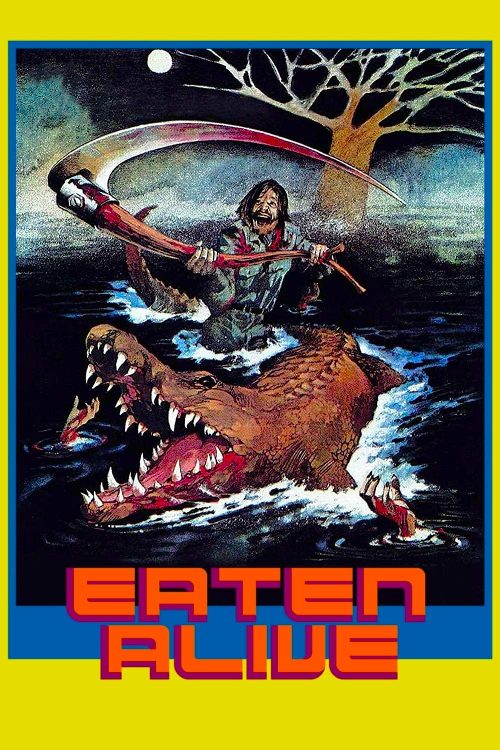
A psychotic redneck owns a dilapidated hotel in rural East Texas, where he murders those who upset him or his business, and then feeds their remains to his pet crocodile in the swamp beside his hotel.
The swampy humidity of rural Texas serves as a claustrophobic backdrop for Tobe Hooper’s 1976 cult classic Eaten Alive, a film that captures the chaotic transition of American horror from the gritty realism of the early seventies into the stylized, neon-drenched nightmares of the decade to follow. Long before Robert Englund became a household name as the face of a dream-stalking slasher, he appeared here as a menacing figure patrolling the shadows of a ramshackle motel. The narrative centers on a volatile proprietor who views his isolation as a license for madness, ensuring that any unfortunate guest who disrupts his fragile equilibrium meets a gruesome end. By utilizing the primal fear of an apex predator lurking just beneath the murky surface of the water, the production leans heavily into a sense of dread that feels both isolated and inescapable.
For cinephiles who appreciate the evolution of the slasher genre, this film acts as a fascinating bridge between the experimental roots of independent horror and the more formulaic structures that would define the eighties. While many contemporary Indian thriller enthusiasts might find the pacing distinct from the high-octane suspense of modern Telugu or Tamil genre cinema, the film shares a common DNA with regional Indian horror in its reliance on atmosphere and the subversion of domestic spaces. Just as many Indian filmmakers use folklore and superstition to ground their terrors, this film roots its horror in the unsettling reality of a man losing his grip on sanity in a forgotten corner of the American landscape. It is a bold, visually striking exercise in suspense that prioritizes mood over jump scares, making it a required watch for anyone interested in the pedigree of the exploitation era.
The director, Tobe Hooper, brings the same visceral intensity to this project that he famously applied to his more widely recognized works. The cast, featuring the seasoned Stuart Whitman alongside the emerging talent of the era, manages to sell the absurdity of the premise with a dedicated, often frantic energy. Viewers who enjoy character-driven tension and period-specific aesthetics will likely find much to admire in the film's deliberate, swamp-soaked art direction. It is positioned not merely as a creature feature, but as a deep dive into the darker impulses of human isolation. Those looking for a raw, uncompromising cinematic experience that rejects the polished edges of modern studio horror will find this to be a quintessential example of mid-seventies American gothic storytelling that continues to influence the genre today.
Cast(23)