About Emperor Jones
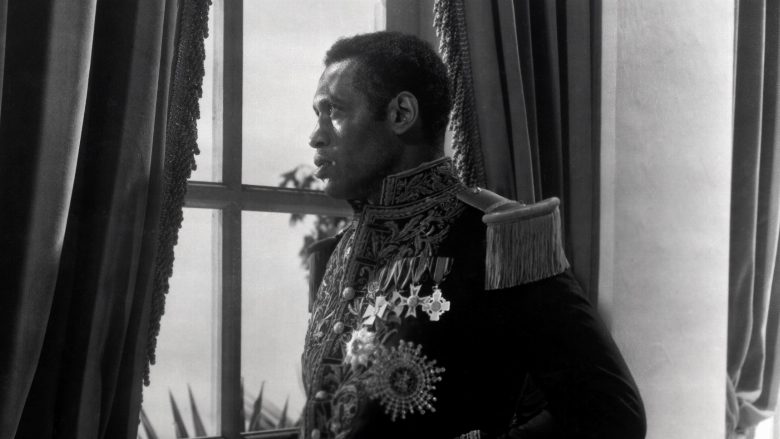
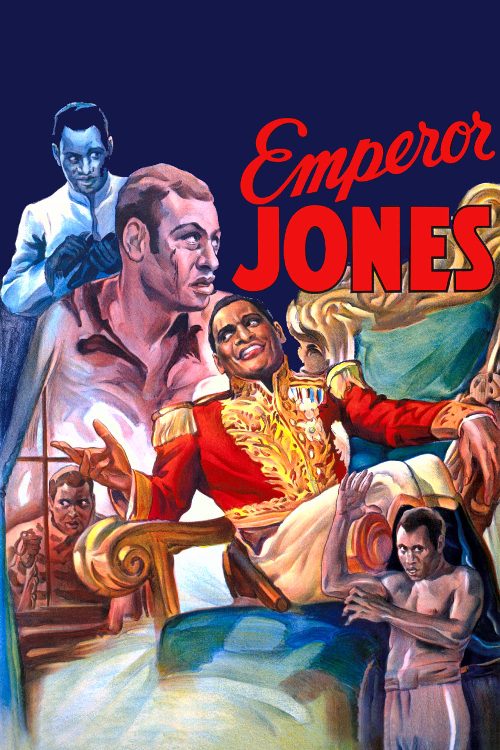
Unscrupulously ambitious, Brutus Jones escapes from jail after killing a guard and, through bluff and bravado, finds himself the emperor of a Caribbean island.
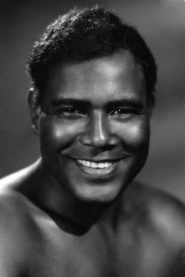
Few cinematic performances in the early thirties possess the sheer gravitational pull of Paul Robeson in Emperor Jones. This adaptation of Eugene O Neill's seminal stage play serves as a landmark moment in American film history, marking a rare instance where a black lead commanded the screen with such unyielding intensity during a period of rigid industry constraints. By grounding the narrative in the meteoric ascent of a man who leverages his wits and inherent charisma to seize power in an unfamiliar land, the film explores themes of ambition, survival, and the psychological weight of authority. For those who appreciate the evolution of character-driven drama, this production offers a fascinating look at how theatrical gravitas was translated into the visual language of early sound cinema.
The story follows Brutus Jones, a figure defined by his relentless drive to transcend his circumstances, whose journey takes him from the confines of a prison cell to the apex of a Caribbean island nation. Through a mixture of cunning manipulation and sheer force of personality, he transforms his reality, yet the film remains deeply invested in the internal cost of his rise. It is not merely a tale of political or social maneuvering but a study of a man confronting the ghosts of his own choices. The presence of Billie Holiday in a supporting capacity adds a layer of cultural resonance, grounding the film in a rich artistic tradition that often went underrepresented in mainstream studio outputs of that decade.
Modern audiences who enjoy the narrative complexity found in contemporary global cinema, particularly the character studies prevalent in current Indian independent films that examine power dynamics and social mobility, will find much to admire here. The film functions as a stark contrast to the escapist musical spectacles that dominated the era, choosing instead to focus on the volatile intersection of hubris and destiny. It is highly recommended for viewers who prioritize acting masterclasses over high-concept spectacle, as Robeson carries the narrative with a resonance that remains potent nearly a century later. By analyzing the rise and inevitable instability of its protagonist, the film provides a timeless critique of unchecked ego, making it an essential watch for students of film history and those interested in the foundational works of dramatic storytelling.
Cast(10)