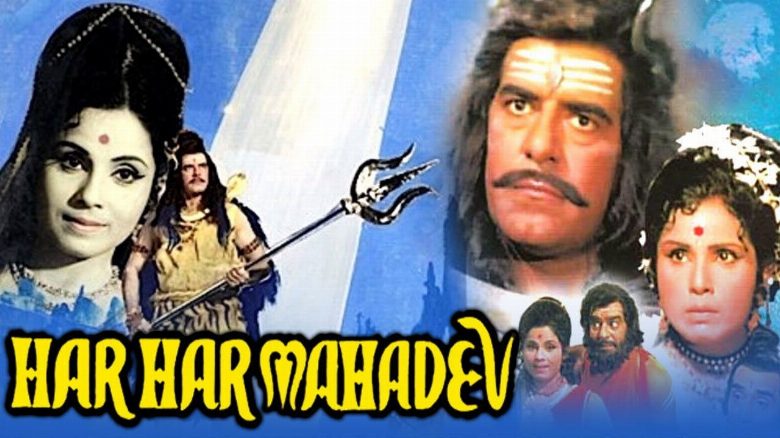
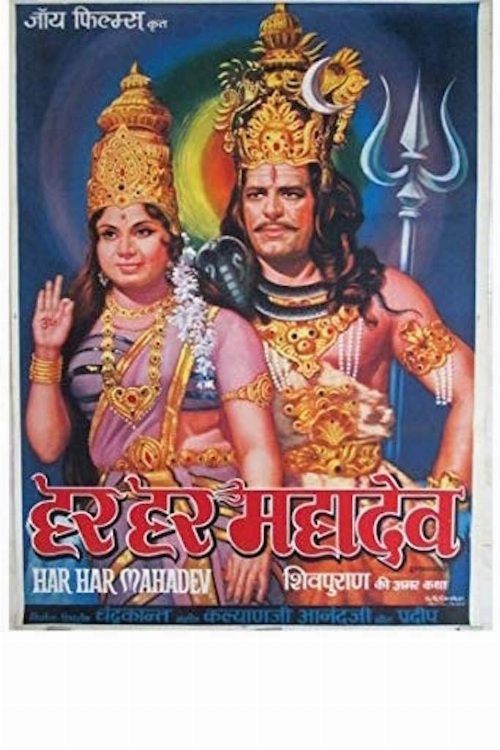
Har Har Mahadev(1974)
About Har Har Mahadev
Film adaptation of the Shiva Purana
Stepping back into the golden age of mythological cinema, Har Har Mahadev serves as a grand testament to the enduring fascination Indian audiences have held for stories rooted in ancient scripture. Directed by Chandrakant Gaur, this 1974 production brings the Shiva Purana to life with a sense of reverence and theatrical flair that defined the period. While modern regional cinema has shifted toward gritty realism or high-octane action, this film occupies a distinct space in the Hindi cinematic canon, catering to viewers who value the epic storytelling traditions that once dominated the national consciousness. By focusing on the cosmic narratives surrounding Shiva, the film manages to bridge the gap between religious devotion and large-scale entertainment, a balance that studios have struggled to replicate in recent decades.
The casting choices reveal much about the era’s star power, featuring icons like Dara Singh and Jayshree Gadkar who were widely beloved for their ability to embody archetypal characters with grace and physical conviction. Dara Singh, in particular, brought a recognizable intensity to his roles that resonated deeply with families across India, making him the perfect anchor for a project of this magnitude. Alongside performers like Abhi Bhattacharya and Asit Sen, the ensemble creates a tapestry of characters that feel both grand and accessible. For those interested in the evolution of Hindi film, this work provides a fascinating look at how filmmakers utilized practical sets and traditional acting styles to convey divine wonder before the rise of digital visual effects.
Today, Har Har Mahadev stands as an essential watch for cinephiles who appreciate the historical trajectory of devotional films. It is not merely a product of its time but a window into a cultural landscape where mythology served as the primary source of communal storytelling. Viewers who enjoy exploring the roots of Indian epic cinema or those seeking to understand the foundational aesthetics of 1970s religious dramas will find much to admire here. By prioritizing the emotional and spiritual weight of its subject matter over modern pacing, the film invites the audience to slow down and immerse themselves in a cinematic style that prioritizes mythic storytelling above all else. Whether you are a scholar of Indian film history or simply a fan of classic narratives, this piece remains a compelling example of how directors once translated sacred texts into the vivid, oversized language of the silver screen.