About Hijack
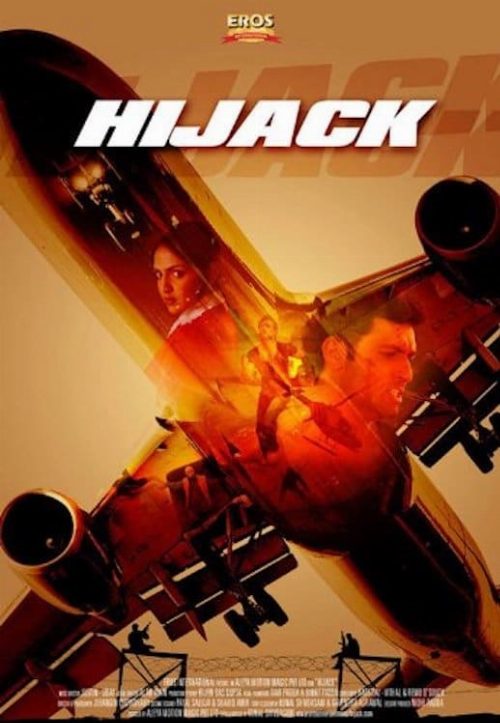
Hijack is an action thriller. The film revolves around Vikram Madan (Shiney Ahuja) who is a ground maintenance officer at the Chandigarh airport. His social life is limited to one friend, Rajeev, who is the Security Chief of the same airport. As luck would have it, the flight in which Vikram’s daughter was traveling to Amritsar from Delhi, is hijacked.
The landscape of Hindi cinema in the late two thousands was marked by a growing fascination with high-stakes genre experiments, and Hijack stands as a distinct attempt to bring the intensity of global airborne suspense narratives to the domestic market. Director Kunal Shivdasani crafts a claustrophobic scenario where the hero is not a professional commando or a decorated officer, but an ordinary ground technician thrust into an extraordinary crisis. By centering the story on a protagonist whose motivation is purely personal—the protection of his own child—the film taps into the raw, primal fear of parental helplessness. This choice moves the narrative away from typical jingoistic action tropes, opting instead for a grounded perspective that emphasizes the vulnerability of those caught in the crossfire of a tactical siege.
What distinguishes this project from other thrillers of the era is its focus on the logistical and structural realities of an airport setting. Rather than relying solely on grand spectacle, the film utilizes the technical background of its lead character to navigate the unfolding danger. Shiney Ahuja plays the role of Vikram Madan with a desperate urgency that anchors the film, balancing the quiet life of a maintenance worker against the sudden, violent disruption of his world. Alongside him, the ensemble cast helps flesh out the tension within the confined space, creating a sense of urgency that permeates the screen. It is a work that captures the specific anxieties of the urban Indian viewer, who found themselves increasingly exposed to global security concerns during that period of rapid infrastructural development.
Fans of fast-paced, incident-heavy dramas will likely find the pacing and the escalating stakes of the flight crisis particularly engaging. The film functions as a bridge between the traditional star-driven vehicles of the time and the more modern, concept-oriented thrillers that prioritize plot momentum over musical interludes. It is a quintessential weekend watch for those who appreciate the aesthetic of mid-aughts suspense cinema, where the focus remains strictly on the mechanics of the rescue mission. For audiences who enjoy analyzing how filmmakers handle the challenge of limited settings, this movie offers a compelling look at how tension is manufactured through spatial constraints and character-driven stakes. It serves as a stark reminder of the fragile nature of safety in a modern, interconnected world, making it a curious artifact of the action genre that remains worth revisiting for its commitment to a singular, high-pressure premise.