About Hope and Glory
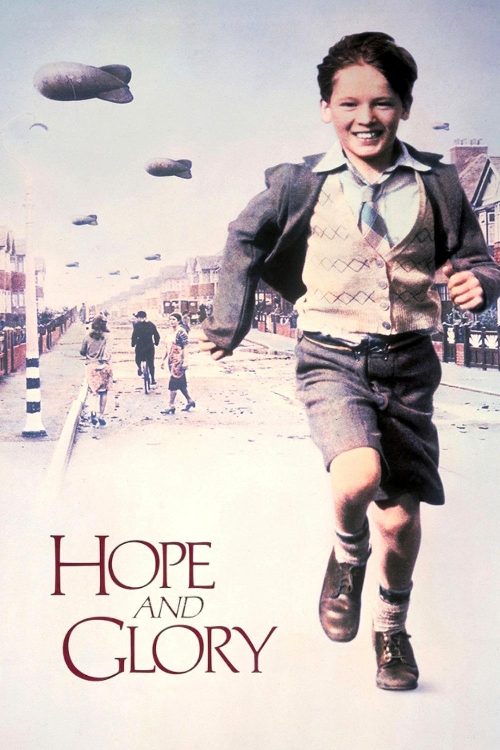
A middle-aged man recalls his childhood growing up in and around London during World War II.
John Boorman transformed the harrowing reality of the Blitz into a vivid tapestry of childhood wonder in his semi autobiographical masterpiece Hope and Glory. By shifting the focus away from the tactical maneuvers of the battlefield and toward the domestic sphere, the film captures a perspective rarely seen in war cinema. Instead of dwelling on the geopolitical stakes of the conflict, the narrative thrives on the resilience and bizarre normalcy that children adopt when their world is literally falling apart. It is a striking examination of how innocence persists amidst the chaos of falling bombs, painting a portrait of a London family navigating the surreal erosion of their daily routines.
The cultural legacy of this film remains significant for its refusal to treat the period with the somber, monochromatic lens often applied to historical dramas. While many films of the era leaned into the stiff upper lip stoicism of the British home front, this production embraces a chaotic, almost mischievous energy. For viewers who appreciate the gritty, grounded realism found in contemporary Indian period dramas that explore how systemic upheaval affects the common household, this film serves as an evocative touchstone. It bridges the gap between tragedy and dark comedy, proving that even under the constant threat of aerial bombardment, human personality and sibling rivalries remain the primary drivers of life.
Audiences who enjoy character driven storytelling will find the performances particularly compelling, as the young leads anchor the film with an authenticity that avoids becoming overly sentimental. Sebastian Rice Edwards provides a grounded center for the story, allowing the audience to witness the transformation of wartime terror into a strange, playground version of adventure. This approach resonates with the sensibilities of modern viewers who prefer layered narratives that prioritize emotional truth over spectacle. It is a quintessential piece for anyone interested in the evolution of war cinema as a domestic study rather than a tactical exercise. Boorman successfully crafts a legacy piece that feels as intimate as a home video while retaining the grand scale of a historical epic, securing its place as an essential watch for those who value cinema that finds humanity in the most unlikely of places.
Cast(35)