
About If I Had Legs I'd Kick You
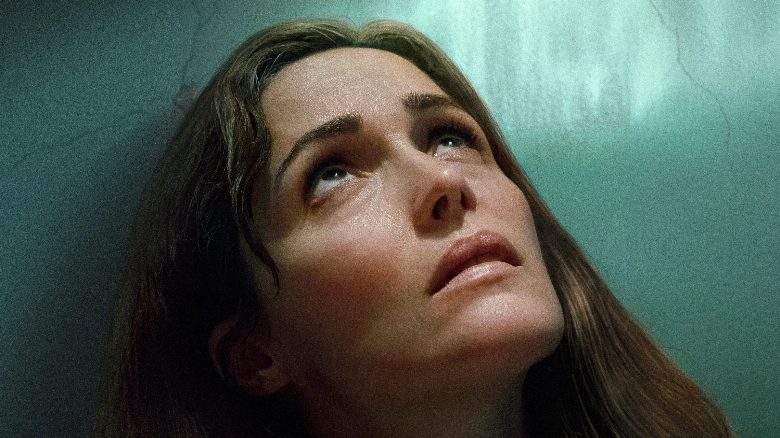
With her life crashing down around her, Linda attempts to navigate her child's mysterious illness, her absent husband, a missing person, and an increasingly hostile relationship with her therapist.
The weight of invisible burdens often creates the most compelling cinematic tension, and If I Had Legs I d Kick You arrives as a stark exploration of domestic isolation and psychological unraveling. While global audiences are increasingly turning toward the nuanced, high-stakes dramas emerging from the Indian regional landscapes, this English-language project offers a different kind of intensity. It strips away the spectacle of contemporary blockbusters to focus on a singular, claustrophobic experience. The narrative centers on Linda, a woman whose world is fracturing under the pressure of a child suffering from an unexplained medical condition. By weaving in the complexities of an estranged marriage and the sudden, unsettling disappearance of a secondary figure, the film constructs a puzzle that is as much about the protagonist's fraying sanity as it is about external threats.
The film distinguishes itself by eschewing the typical tropes of the mystery genre, choosing instead to lean into character-driven discomfort. The friction between Linda and her therapist serves as the emotional anchor, transforming standard dialogue into a battlefield of hidden agendas and missed cues. For viewers who appreciate the slow-burn psychological depth found in recent independent cinema, this project promises a journey that prioritizes internal stakes over cheap thrills. It positions itself as an intimate portrait of a woman pushed to her absolute limit, making it a must-watch for those who enjoy stories where the atmosphere is just as important as the plot itself. The production values suggest a commitment to a gritty, grounded aesthetic that mirrors the volatility of the protagonist’s environment.
This piece of storytelling feels particularly relevant in an era where audiences are craving narratives that challenge the traditional boundaries of the domestic drama. By focusing on the intersection of medical anxiety and relational decay, the film taps into a universal sense of helplessness that resonates deeply across cultures. It does not rely on grandiose gestures but rather on the subtle, crushing weight of daily life when it suddenly shifts into the unknown. Whether it is the cold sterility of a clinical setting or the suffocating silence of an empty house, the visual language appears designed to keep the audience on edge. Fans of taut, character-focused dramas will find plenty to dissect here, as the film invites us to question the reliability of memory and the true cost of seeking answers in a world that refuses to provide them.
Cast(19)