

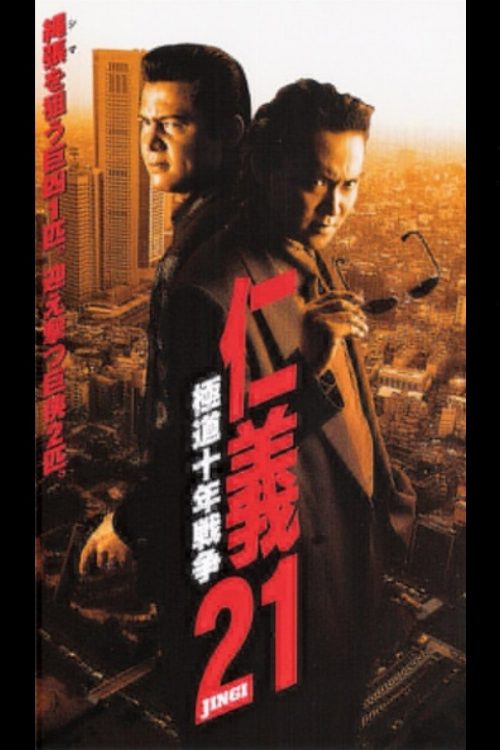
Jingi 21: Yakuza Decade War(1999)
About Jingi 21: Yakuza Decade War
After the fierce conflict, the sand group and the dragon party were under the control of the same Kanto Ichienkai. One day, Kuroki, the driving force behind the end of the war, returned in the shape of a sword. At the dragon party, Odashima, who was Kuroki's younger brother, sprinkled a shab of the law on the sand group Shima and began to harass him. Hitoshi and Yoshiro, who realized that the aim was the Shima of the sand group, immediately talked to Odashima.
The late nineties represented a fascinating transition period for the Japanese V-cinema landscape, a direct-to-video market that often pushed the boundaries of genre convention much further than mainstream theatrical releases. Jingi 21: Yakuza Decade War stands as a quintessential artifact of this era, capturing the raw intensity and hyper-masculine melodrama that defined the period. While global audiences today are frequently introduced to Japanese crime dramas through the polished lens of high-budget auteur cinema, this film offers a more visceral, unvarnished look at the internal power struggles of organized crime syndicates. It serves as a reminder that the Japanese underworld genre was not always about existential meditation, but often functioned as a high-octane serial narrative where loyalties were as fragile as the alliances brokered between rival factions.
At its heart, the film explores the volatile aftermath of a major territorial consolidation, focusing on the friction caused when a legendary figure returns to the fold in a symbolic fashion. The narrative tension is driven by the complex relationship between the dragon party and the sand group, particularly through the antagonistic maneuvers of Odashima. His calculated harassment of the established order acts as a catalyst for a chain reaction of betrayals and strategic confrontations. For viewers who appreciate the intricate social hierarchies depicted in modern pan-Indian cinema, such as the gritty political maneuvering often seen in recent Telugu or Tamil underworld sagas, the tactical chess match unfolding here will feel surprisingly familiar. It highlights the classic trope of brotherhood tested by systemic corruption, a theme that resonates across cultures, from the busy streets of Osaka to the intense gangland dramas of Mumbai.
Noboru Matsui directs with a pace that prioritizes the escalating stakes of the conflict, ensuring that the character dynamics remain the focal point even as the tension reaches a boiling point. The inclusion of genre veterans like Riki Takeuchi adds a layer of authenticity that fans of nineties action cinema will immediately recognize and appreciate. This film is an essential watch for enthusiasts of regional crime epics who want to understand the lineage of the modern action thriller. It is not merely a story of violence, but a study of how the legacy of one man can disrupt the delicate peace maintained by competing criminal entities. By focusing on the personal vendettas that threaten to dissolve a decade of relative stability, the production successfully bridges the gap between character-driven drama and the explosive genre excitement that defined a generation of Japanese filmmakers.