Kinnikuman II Sei: Muscle Ninjin Soudatsu! Choujin Daisensou(2002)
About Kinnikuman II Sei: Muscle Ninjin Soudatsu! Choujin Daisensou
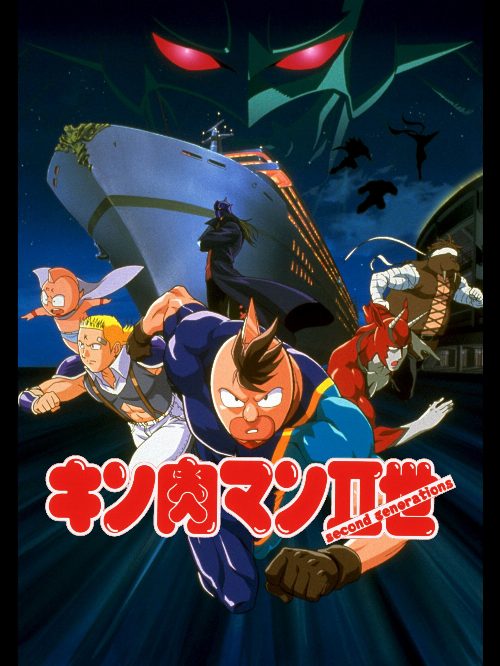
Princess Darenanda and Arenanda were on their way to Japan on the maiden voyage of the luxury cruise ship Rosebud to deliver Muscle Carrot, a secret elixir that is said to dramatically power up superhumans, to the righteous superhumans. However, a cruel superhuman army targeting the Muscle Carrot appears and takes over the Rosebud. Arenanda escapes alone and asks Mantaro, Kid and the others for help in rescuing the captured princess. Mantaro is the only one who hates scary things and tries to refuse, but when he notices that the princess is exceptionally beautiful, he is motivated! The group infiltrates the Rosebud in a Cessna! Will Mantaro and his friends be able to rescue the kidnapped princess? And what is the purpose of the evil superhumans who are targeting the princess?
Anime fans looking for a blast of early millennium nostalgia will find a peculiar charm in Kinnikuman II Sei: Muscle Ninjin Soudatsu! Choujin Daisensou. Released in 2002, this feature film leans into the high-octane, slapstick energy that defined the era of shonen adaptations. While modern viewers might be accustomed to the gritty, hyper-realistic animation styles currently dominating the global market, this project offers a refreshing return to the roots of wrestling-inspired superhero chaos. The narrative centers on a high-stakes maritime rescue mission triggered by the theft of a mystical carrot capable of augmenting superhuman strength. By positioning the reluctant hero Mantaro at the heart of an infiltration plot, the film balances traditional action beats with the character-driven humor that fans of the franchise have long enjoyed.
The cultural footprint of this series is significant, as it bridges the gap between classic wrestling manga tropes and the more frantic pacing of turn-of-the-millennium animation. For those who enjoy the vibrant, slightly absurd world-building found in long-running Japanese franchises, this movie serves as a perfect encapsulation of why these characters remain beloved decades later. It does not attempt to reinvent the wheel, but rather focuses on delivering an accessible, fast-paced adventure that showcases the distinct personalities of the core cast. The dynamic between the terrified protagonist and his more battle-ready peers provides a grounded, comedic anchor for the otherwise fantastical premise. It is particularly well-suited for viewers who appreciate vintage aesthetics and the specific brand of melodrama that defines superhero-centric animation from this period.
Directorial choices here emphasize movement and kinetic impact, ensuring that the transition from a luxury cruise ship setting to aerial acrobatics feels seamless. The voice acting ensemble, featuring stalwarts like Toshiyuki Morikawa, brings a layer of gravitas to the absurdity, successfully selling the stakes even when the plot dips into ridiculous territory. Because the film avoids overly complex lore, it functions effectively as a standalone piece for newcomers while offering plenty of nods for established followers of the series. If you are in the mood for an unpretentious, character-focused romp that prioritizes fun over philosophical weight, this entry stands as a testament to the enduring appeal of the Kinnikuman legacy. It remains a fascinating relic that captures the spirit of a time when the stakes were always personal and the heroes were often just as flawed as they were powerful.