

About La Mission
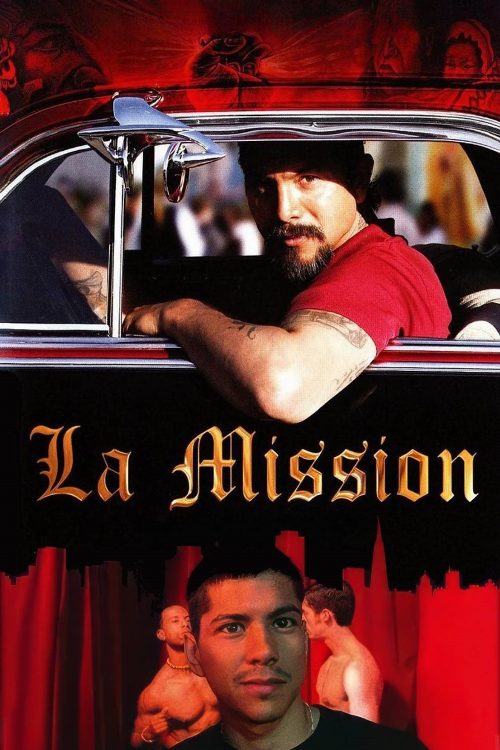
Growing up in the Mission district of San Francisco, Che Rivera has always had to be tough to survive. He's a powerful man respected throughout the Mission barrio for his masculinity and his strength, as well as for his hobby building beautiful lowrider cars. A reformed inmate and recovering alcoholic, Che has worked hard to redeem his life and do right by his pride and joy: his only son, Jes, whom he has raised on his own after the death of his wife. Che's path to redemption is tested, however, when he discovers Jes is gay. To survive his neighborhood, Che has always lived with his fists. To survive as a complete man, he'll have to embrace a side of himself he's never shown.
Set against the backdrop of the iconic San Francisco neighborhood that gives the film its name, La Mission is a profound exploration of the intersection between rigid masculinity and the necessity of personal evolution. Peter Bratt crafts a narrative that feels both deeply localized and universally resonant, focusing on Che Rivera, a man whose identity is forged in the fires of street credibility and the meticulous craft of customizing lowrider vehicles. While the film operates within the framework of a character-driven drama, it functions primarily as a bridge between the traditional expectations of community pride and the shifting realities of modern family dynamics. It stands apart from typical urban dramas by refusing to rely on genre tropes, choosing instead to anchor its tension in the internal psychological shift of its protagonist rather than external violence.
The emotional core of the story rests on the strained relationship between Che and his son, Jes, whose personal truth challenges the very foundation of the life Che has painstakingly rebuilt. For audiences familiar with the intense family-centric storytelling often found in the best of Indian regional cinema, such as the works of Lijo Jose Pellissery or the layered familial conflicts seen in modern Telugu dramas, this film offers a similar depth of cultural immersion. It captures the specific rhythms of the Mission district with the same authenticity that great filmmakers bring to their own regional landscapes, highlighting how community legacy can be both a protective armor and a restrictive barrier. Benjamin Bratt delivers a performance that is remarkably controlled, portraying a man who must decide whether his strength lies in maintaining his hardened exterior or in the courage required to accept change.
Viewers who gravitate toward character studies that prioritize quiet emotional confrontation over explosive spectacle will find much to admire here. It is a thoughtful, steady-paced film that rewards patience, making it an ideal choice for those who value cinema that functions as a mirror for personal growth. By placing the narrative in a specific, lived-in environment, the director avoids the pitfalls of melodrama, allowing the stakes to feel personal and urgent. For fans of global cinema who track the evolution of the father-son dynamic in modern storytelling, this 2009 release remains a vital piece of the conversation, demonstrating that the most challenging battles for a man often take place within the sanctuary of his own home. It is a compelling reminder that the path toward redemption is not just about correcting past mistakes but about expanding one's capacity for empathy.
Cast(13)