
About Magpie
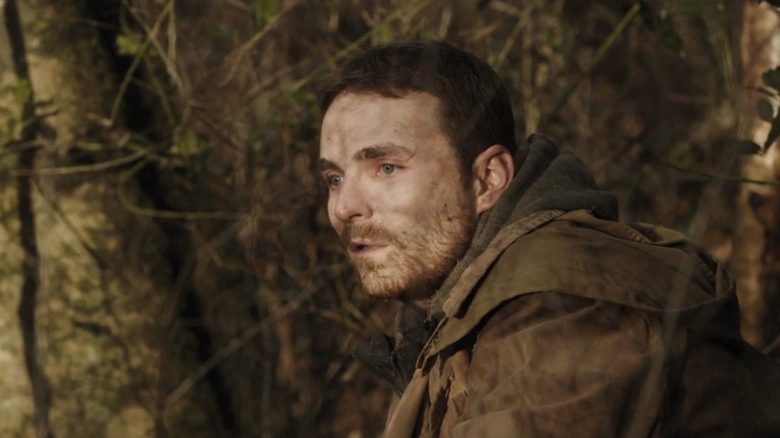
A man lives in a forest, surviving through murder and deceit. When he finds himself drawn to two strangers, his strict code of self-preservation is put to the test.
Deep within the dense, unforgiving shadows of a woodland landscape, Stephen Fingleton crafts a chilling portrait of isolation and moral decay in the thriller Magpie. Rather than relying on standard genre tropes, the film strips away the comforts of civilization to examine a protagonist who has abandoned humanity in favor of cold, calculated survival. Martin McCann delivers a haunting performance as a man whose existence is defined by a ruthless cycle of betrayal and violence, yet the narrative takes a sharp turn when the sudden arrival of two outsiders threatens to dismantle his carefully constructed fortress of solitude. This is not merely a tale of survival but a psychological exploration of how quickly a person can lose themselves when they are accountable to no one but their own instincts.
The film stands out for its minimalist approach to tension, favoring atmospheric dread over flashy spectacle. By placing characters in such a stark, claustrophobic environment, Fingleton forces the audience to confront the primal desperation that often hides beneath the surface of civilized behavior. Fans of independent psychological thrillers who appreciate slow-burning narratives and character-driven stakes will find much to admire here. The chemistry between McCann, Olivia Williams, and Mia Goth injects a volatile energy into the story, as their interactions reveal the fragility of the protagonist’s self-imposed rules. It is a stark departure from the high-octane action often found in mainstream cinema, instead opting for a quiet intensity that lingers long after the screen goes dark.
For viewers who enjoy films that challenge their comfort zones and prioritize mood over exposition, Magpie offers a compelling, if uncomfortable, journey. It functions as a cautionary study of what happens when a man attempts to exist outside the bounds of society, only to find that his past and his impulses have a way of catching up to him. Fingleton demonstrates a clear vision for the thriller genre, successfully building a world where every silence feels loaded with potential danger. Whether one is drawn to the technical precision of the cinematography or the complex layers of the central performances, the film remains a standout example of how to build suspense through atmosphere and character psychology. It is a grim, thoughtful piece of filmmaking that demands the full attention of anyone seeking a sophisticated look at the darker corners of the human condition.