About May Fools
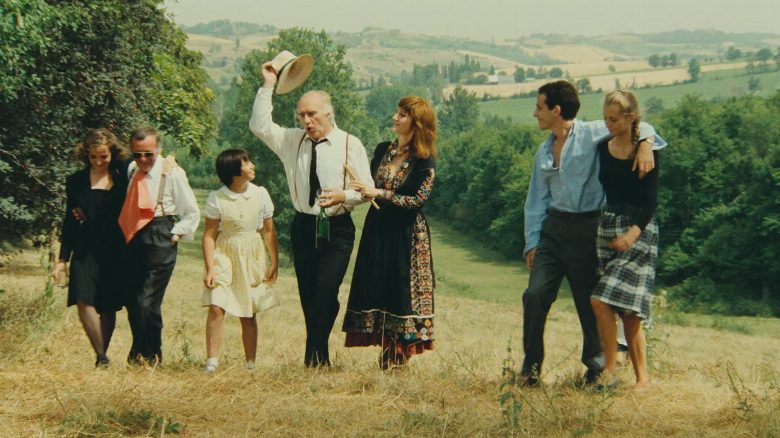
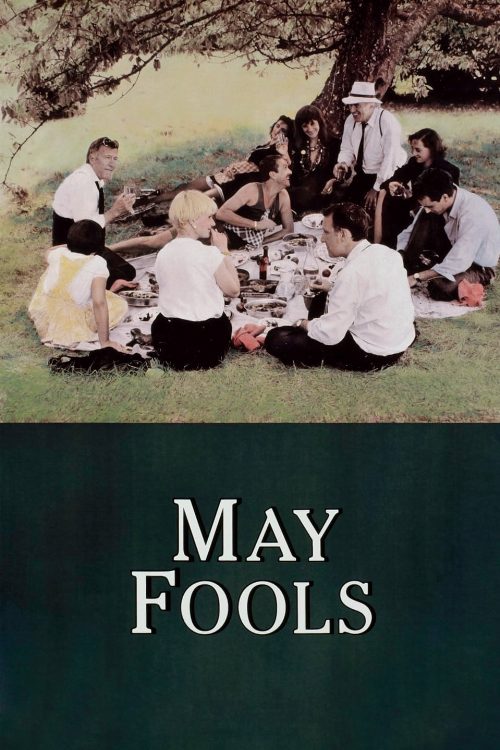
During the events of May 1968 in France, different worldviews of conflicting relatives collide in their family estate.
The historical turbulence of France in May 1968 serves as a vivid, chaotic backdrop for this character-driven study of internal family dynamics. While many films set during this era focus exclusively on the student protests and street barricades of Paris, this production turns the lens toward the domestic sphere, where the seismic shifts in society are felt in the quiet, desperate arguments of a fractured household. The premise follows a group of relatives who gather at a sprawling country estate, providing a fascinating look at how macro-political events ripple through personal relationships. It is a sharp, witty exploration of how ideology can expose deep-seated fissures in even the most established family structures, turning a peaceful retreat into a pressure cooker of clashing perspectives and suppressed resentments.
For viewers who appreciate the sophisticated, dialogue-heavy tradition of European cinema, this film offers a masterclass in ensemble acting. The cast features heavyweights like Michel Piccoli and Miou-Miou, who bring an authentic weariness and intellectual vanity to their roles that makes the domestic friction feel entirely believable. The film captures a distinct moment where the old guard of the French bourgeoisie finds itself unable to reconcile with the shifting tides of the younger generation. It functions less as a historical documentary and more as a satirical portrait of human nature under duress. Those who enjoy the nuanced social commentary found in regional Indian cinema, particularly in the works of directors who use family homes as microcosms for societal change, will find a kindred spirit in the way this story balances humor with a somber recognition of change.
What makes this work stand out is its refusal to take a side, allowing the audience to observe the absurdity inherent in these conflicting worldviews. By isolating the characters in a rural setting, the narrative forces them to confront each other without the distraction of the urban uprising, highlighting the vanity and selfishness that often hide behind grand political rhetoric. It is an essential watch for cinephiles who value atmosphere and character depth over plot-heavy spectacle. Whether you are a dedicated student of French New Wave sensibilities or simply someone interested in how history disrupts the private lives of ordinary people, this film provides a thoughtful, entertaining look at a pivotal moment in global culture. It remains a timeless reminder that while the world outside may be changing rapidly, the internal conflicts of a family are often deeply rooted in tradition and ego.
Cast(27)