About Misadventures in 3D
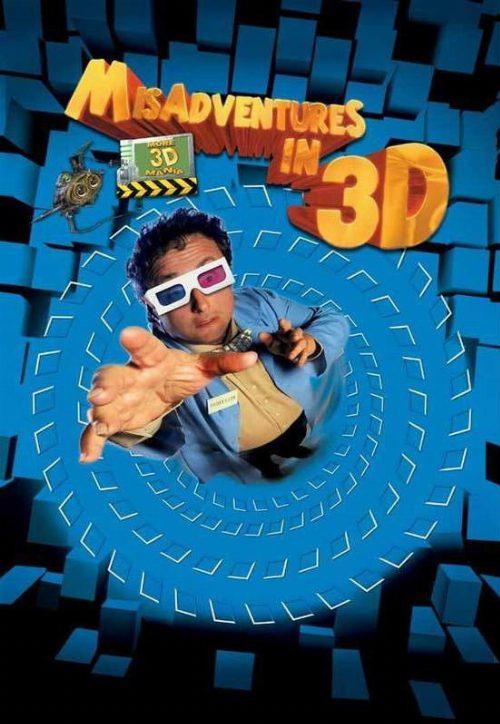
The wrong place. The wrong time. The wrong dimension.
Stumbling into a cinematic experiment that defies traditional narrative boundaries, Misadventures in 3D serves as a curious time capsule from the early two thousands. Directed by Ben Stassen, this project occupies a niche space where the technical wizardry of stereoscopic imagery meets the lighthearted energy of slapstick performance. While the Indian film industry has recently embraced high-end visual effects and immersive formats to scale up its regional epics, this particular production takes a more intimate, experimental approach. It functions less as a grand spectacle and more as a proof of concept for the potential of depth perception in storytelling, utilizing the medium to emphasize physical comedy in a way that flat screens rarely capture.
The film leans heavily into the chaotic energy of its ensemble cast, featuring performances by Stuart Pankin and Kim Delgado that rely on timing and exaggerated movement to ground the visual gimmicks. In an era where audiences are increasingly accustomed to the seamless integration of computer-generated environments in pan-Indian blockbusters, revisiting this early foray into dimensional filmmaking provides a fascinating contrast. It highlights how directors once struggled to balance the novelty of new technology with the basic requirements of character engagement. The humor is designed to be accessible and broad, making it a suitable choice for those who appreciate the evolution of technical filmmaking or are simply curious about how the industry experimented with interactive visual tropes before the current digital revolution.
For viewers who track the trajectory of directors like Ben Stassen, who later became a prominent figure in the world of immersive cinema, this early work offers a glimpse into the foundational logic of his later, larger projects. It is an exploration of space and proximity, designed to provoke a reaction through the sheer absurdity of its premise. While it lacks the sprawling cultural depth found in modern Telugu or Hindi dramas, its charm lies in its commitment to a specific, playful aesthetic. Those who enjoy lighthearted comedy that prioritizes visual playfulness over complex subtext will likely find this a charming, if slightly dated, diversion. It stands as a reminder that the quest to pull audiences deeper into the screen has been a driving force for filmmakers for decades, bridging the gap between simple entertainment and the sophisticated, immersive experiences we see in theaters today.
Cast(8)