
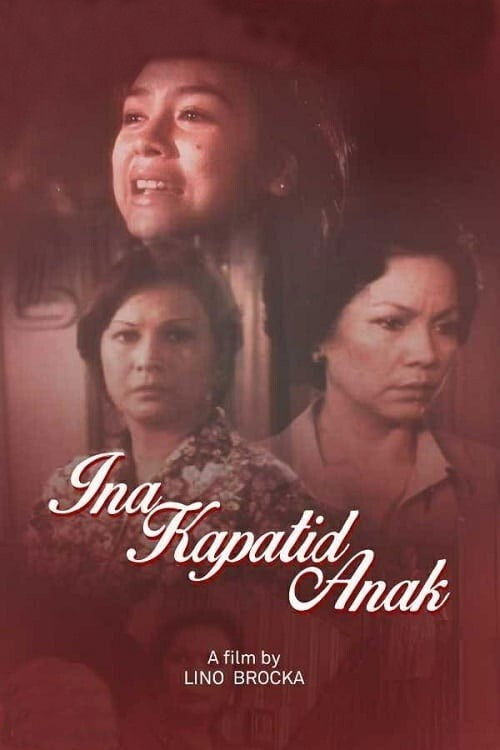
Mother, Sister, Daughter(1979)
About Mother, Sister, Daughter
After 20 years, Pura returns to her ancestral home to meet her father. However, this soon reignites a bitter rivalry between her and Emilia, her half-sister, that impacts the entire household.
Returning to the roots of a family tree often unearths buried secrets that are better left undisturbed. In Mother, Sister, Daughter, filmmaker Lino Brocka masterfully crafts a tense domestic portrait that explores how long-standing familial resentment can fester over decades of separation. The narrative centers on Pura, a woman who steps back into her childhood residence after two full decades of absence, hoping to reconcile with her estranged father. Instead of a warm homecoming, she is thrust into an immediate and volatile standoff with her half-sister, Emilia. This clash of personalities and histories does not merely exist in a vacuum; it ripples through the household, forcing every member to navigate the jagged edges of past grievances and current alliances.
While this film hails from a distinct era of international cinema, its exploration of the complex, often suffocating dynamics of traditional family units will resonate deeply with audiences who appreciate the nuanced domestic dramas currently defining the landscape of contemporary Indian cinema. Much like the intense character studies found in the best of Malayalam or Tamil family sagas, the film prioritizes emotional stakes over grand spectacle. Brocka, a visionary known for his unflinching look at societal pressures, avoids simple melodrama here. Instead, he invites the viewer to witness how the physical space of a home can become a battlefield when personal histories collide. The tension between the lead characters serves as a mirror for broader questions about inheritance, identity, and the heavy price of reconciliation.
Viewers who enjoy slow-burn psychological narratives will find this work particularly compelling. It is a film for those who appreciate cinema that demands patience, rewarding the audience with profound insights into the fraying bonds of kinship. Lolita Rodriguez delivers a performance that anchors the film, balancing vulnerability with a hardened resolve that feels earned through years of exile. By focusing on the intimate friction between two sisters, the story transcends its specific setting to address the universal struggle of finding one's place within a fractured family. For fans of world cinema who seek to understand the foundational works that paved the way for modern character-driven storytelling, this film stands as a testament to the power of human conflict. It is a quintessential study in how, even when we attempt to bridge the gaps of time, the echoes of yesterday remain the loudest voices in the room.