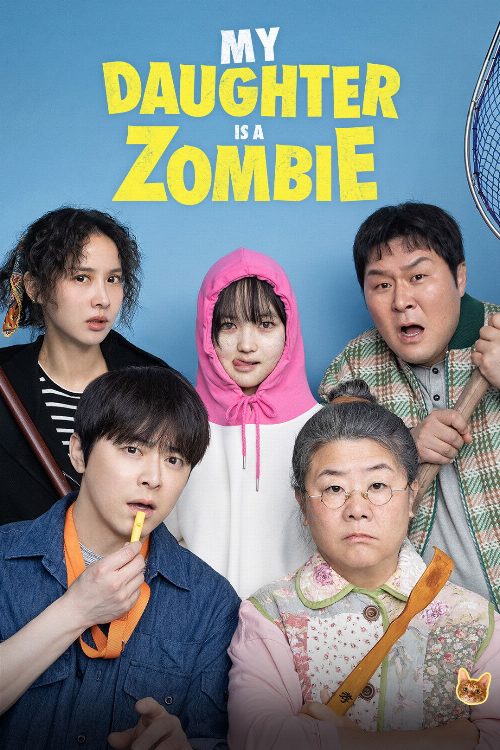
My Daughter is a Zombie(2025)
About My Daughter is a Zombie
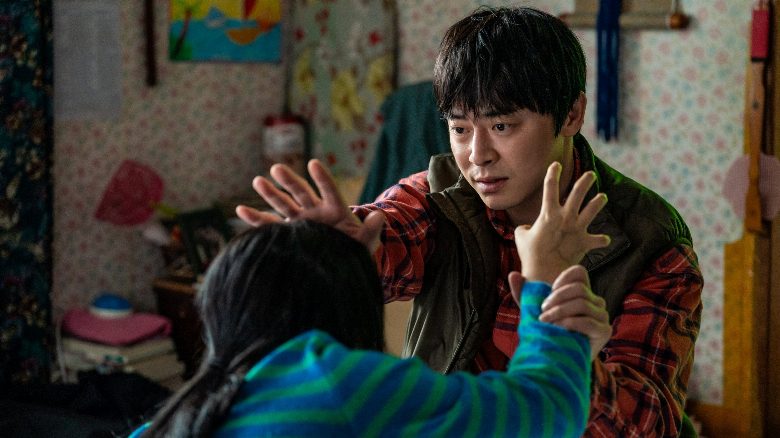
Jung-hwan, a professional wild animal trainer, spends his days bickering and playing with his teenage daughter, Soo-ah, who is passionate about dancing. Then one day, Soo-ah gets infected by a zombie virus that sweeps across the world. To protect her, Jung-hwan takes Soo-ah to Eunbong-ri, a seaside village where his mother, Bam-soon, lives. In a society determined to root out the infected, Jung-hwan notices that Soo-ah still seems to understand words, responds to her favorite songs and dances, and even flinches when scolded by Grandma Bam-soon's back scratching stick. Refusing to give up on his daughter, Jung-hwan calls on his years of animal training experience and begins the top-secret mission of training his zombie daughter…
The intersection of domestic devotion and apocalyptic survival takes a surprisingly whimsical turn in the 2025 Korean feature My Daughter is a Zombie. While global cinema has long utilized the undead as a vehicle for visceral horror or bleak social commentary, this production pivots sharply toward the comedic and the tender. By centering the narrative on an unconventional paternal bond, director Pil Gam-seong challenges the traditional tropes of the genre. The story follows a man whose professional expertise in managing wild beasts becomes his most valuable asset when he must navigate a world that views his infected child as a systemic threat. It is a refreshing departure from the grim, high-stakes survivalism that has dominated the Korean zombie landscape since the massive success of Train to Busan, offering instead a character-driven study on the lengths a parent will go to sustain a sense of normalcy amidst a societal collapse.
Cho Jung-seok anchors the emotional core of the film, utilizing his signature blend of relatable vulnerability and comedic timing to navigate the absurd premise. His character, Jung-hwan, refuses to discard his daughter’s humanity, opting instead to apply the principles of animal conditioning to bridge the gap between her viral transformation and her former self. This dynamic creates a series of humorous and poignant interactions, particularly when the duo retreats to a remote village to escape the prying eyes of a paranoid civilization. The film leans into the absurdity of the situation, finding heart in the small, recognizable moments of family life that persist even when the world outside has surrendered to chaos. The inclusion of a multi-generational household dynamic, featuring the grandmother figure, adds a layer of cultural texture that highlights the importance of family units in surviving crises.
Viewers who appreciate films that defy genre expectations will find much to admire here. It is an ideal recommendation for those who enjoy the tonal balancing act of modern dark comedies, where laughter and melancholy coexist naturally. Fans of the lead actor will likely appreciate his commitment to such a physically demanding and emotionally complex role, which requires him to shift between the frantic energy of a protector and the quiet sorrow of a father clinging to a fading past. As the industry continues to experiment with high-concept premises that ground themselves in human emotion, this film serves as a testament to the versatility of the Korean film market. It is a thoughtful exploration of how we define personhood, wrapped in a narrative that is as entertaining as it is bizarre, making it a standout entry for anyone seeking a fresh perspective on a well-worn cinematic trope.