
About My Father's War
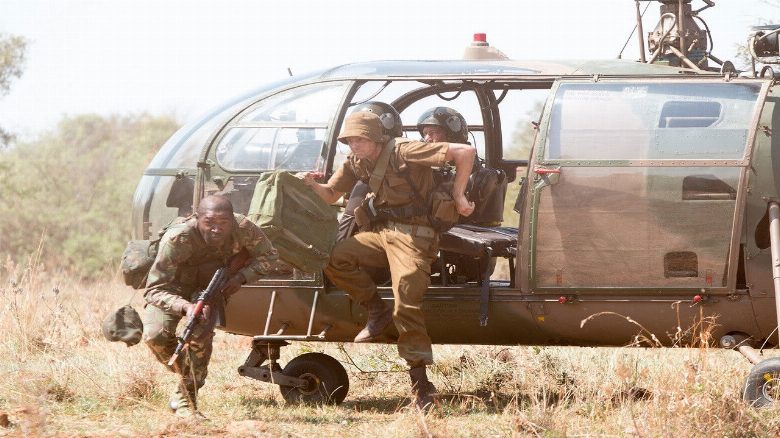
In this unique and riveting film, a troubled man has a series of dreams in which he finds himself thrown back to a time before his birth, into the Angolan Border War, as a combat soldier. There he meets his father as a young man, when he was a member of the Special Forces. As they go through combat together, the son gets to know his father in a way he never has, giving him insight and compassion, and he is able to let go of lifelong feelings of abandonment, resentment and anger. This leads to forgiveness and a real-life reconciliation, which drives home the underlying message of this film restoring the hearts of the fathers to the children and the hearts of the children to the fathers.
Few cinematic experiences manage to bridge the chasm between historical trauma and personal healing with as much emotional resonance as My Father's War. Directed by Craig Gardner, this English-language drama diverges from the typical loud, pyrotechnic-heavy war genre to instead focus on the intimate psychological wreckage that persists long after the smoke clears. By utilizing a dream-state narrative device that transports a disillusioned protagonist into his father's combat experiences during the Angolan Border War, the film acts as a temporal mirror. It forces a son to witness the formative pressures placed upon his parent, effectively humanizing a figure who was previously defined only by his absence or emotional distance.
For audiences accustomed to the high-stakes, hyper-stylized storytelling found in current Indian cinema, where epics often lean into grand spectacle and hero-centric narratives, this film offers a grounded alternative. While industries like Tollywood or Kollywood have mastered the art of the generational saga, My Father's War occupies a more contemplative space, reminiscent of character studies that prioritize internal catharsis over external victory. Stian Bam and Edwin van der Walt provide a compelling anchor for this story, portraying the complex interplay between two men separated by time yet united by the same invisible scars. It is a testament to the universal nature of paternal relationships, exploring how the cycle of resentment can only be broken by stepping into the shoes of those who came before us.
Viewers who appreciate slow-burn dramas that examine the legacy of military service will find this work particularly poignant. It is not merely a depiction of battlefield grit but a meditation on the heavy toll that conflict extracts from the domestic sphere. The film is positioned as a sophisticated look at reconciliation, avoiding easy answers in favor of a nuanced exploration of empathy. By centering the story on the emotional recovery of its characters rather than the geopolitical implications of the conflict itself, Gardner creates a timeless narrative. This is essential viewing for those who seek stories about the difficulty of forgiveness and the quiet bravery required to repair fractured familial bonds, proving that even in the aftermath of war, the most significant battles are often fought within the heart.