

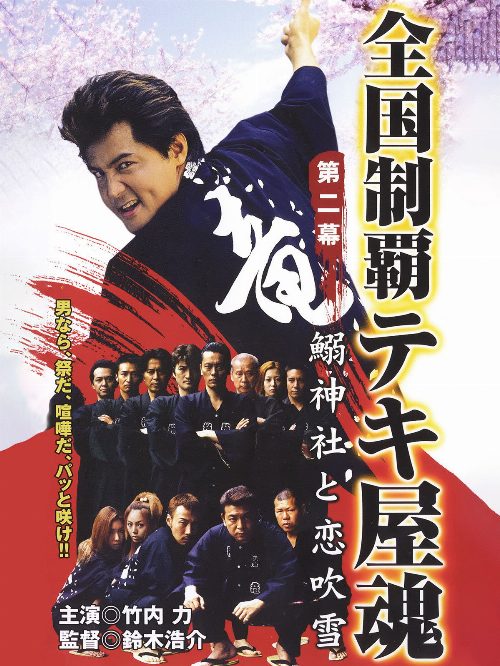
Nationwide Conquering: The Spirit of the Tekiya Chapter 2: Sardine Shrine and a Storm of Love(2001)
About Nationwide Conquering: The Spirit of the Tekiya Chapter 2: Sardine Shrine and a Storm of Love
The second installment of this rousing entertainment series, depicting the chivalry, loyalty, and fiery human spirit of the tekiya crews! Riki Takeuchi’s new world of manly honor explodes onto the screen!
Stepping into the gritty underworld of Japanese genre cinema, Nationwide Conquering The Spirit of the Tekiya Chapter 2 Sardine Shrine and a Storm of Love captures a uniquely stylized vision of nomadic street merchants and the complex codes of conduct that govern their lives. While international audiences often associate Japanese cult cinema with high-concept horror or meditative dramas, this project leans heavily into the tradition of the ninkyo eiga, or chivalry films, which prioritize the unbreakable bonds of brotherhood and the volatile nature of criminal-adjacent subcultures. Director Kosuke Suzuki orchestrates a frantic, high-energy environment where the mundane business of the tekiya, or itinerant peddlers, is elevated to a theater of high-stakes conflict and emotional intensity. It is a bold departure from more polished mainstream offerings, opting instead for a rough-around-the-edges aesthetic that feels authentic to the period of its production.
The film is anchored by a formidable cast including Riki Takeuchi and Kenichi Endo, both of whom have carved out legendary reputations for portraying intense, uncompromising figures on screen. Takeuchi in particular brings a magnetic volatility to his role, ensuring that the narrative remains anchored in a sense of masculine camaraderie that feels both archaic and compellingly urgent. For those who track trends across global cinema, this film serves as an interesting companion piece to the intense, loyalty-driven narratives found in modern Indian action epics like those from the Tamil or Telugu industries. Just as regional Indian cinema often celebrates the larger-than-life hero who stands against systemic pressure to protect his kin, this work explores the moral dilemmas of men living on the fringes of society. It is less about the mechanics of the trade and more about the visceral reaction to threats against their collective dignity.
Viewers who enjoy character-driven crime sagas that do not shy away from melodrama will likely find this chapter particularly engaging. It is an ideal watch for those who appreciate the evolution of the yakuza-adjacent thriller, offering a window into how these groups navigate loyalty when faced with external storms. While the title suggests a whimsical tone, the experience is firmly rooted in the hard-boiled tradition of the early 2000s, where bravado and tragic sentimentality often collide. Because it focuses so intently on the internal politics of the group, the story requires the audience to embrace the specific social rules governing these street merchants. It is a testament to the enduring appeal of stories centered on marginalized warriors, proving that the struggle for honor remains a universal hook regardless of the linguistic or cultural landscape in which the story unfolds.



