Paisa Vasool(2004)
About Paisa Vasool
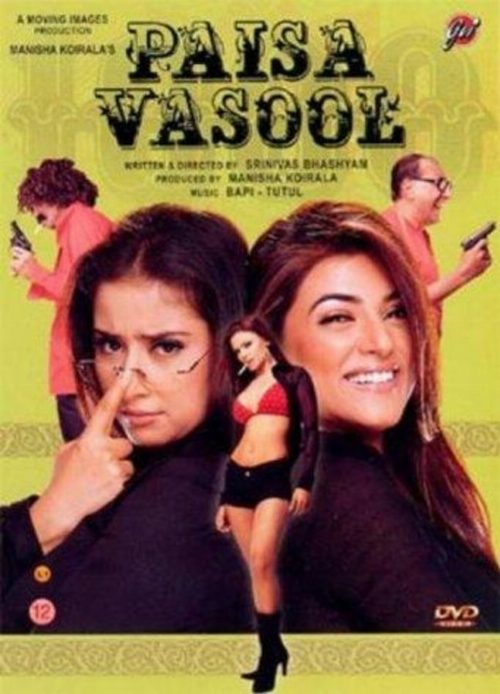
After a chance encounter at a club a struggling actress Baby decides to move in with Maria, a withdrawn divorcee who is having financial troubles and run-ins with the maffia. By accident the two women overhear a conversation in which a man confesses committing a robbery to his girlfriend. The two women decide to blackmail him for a piece of the action. Unfortunately the robbers have no intention of just rolling over.
In the landscape of early 2000s Hindi cinema, Paisa Vasool arrived as a stylistic outlier, trading the glossy melodrama of the era for a gritty, urban noir sensibility that felt far ahead of its time. Directed by Srinivas Bhashyam, the film serves as an intriguing intersection of dark humor and suspense, anchored by the magnetic presence of Sushmita Sen. While the mainstream industry was largely preoccupied with sprawling family dramas and extravagant romances, this project carved out a niche by focusing on the desperate, everyday struggles of two women navigating the unforgiving underbelly of Mumbai. By centering the narrative on an unlikely alliance between a fledgling performer and a guarded, cynical divorcee, the film challenges the conventional portrayals of female camaraderie often seen in commercial Bollywood offerings.
The core premise hinges on a volatile decision made by the protagonists after they inadvertently stumble upon a criminal secret. Instead of retreating from the danger, their choice to pursue a high-stakes extortion scheme sets off a chain reaction that transforms their mundane existence into a frantic game of survival. This shift from domestic instability to a dangerous underworld confrontation provides a sharp commentary on the pressures of city life and the lengths to which individuals will go when pushed toward economic desperation. The film benefits immensely from a supporting cast known for their ability to inhabit eccentric, morally ambiguous roles, which lends a sense of unpredictability to the unfolding conflict. It is a rare example of a Hindi crime thriller that relies more on character tension and situational irony than the overblown action sequences that defined much of the decade.
Viewers who gravitate toward unconventional storytelling or those with an interest in the experimental side of millennial Indian cinema will find much to appreciate here. It is particularly well-suited for audiences who enjoy narratives where the lines between hero and antagonist are perpetually blurred. Sushmita Sen, known for her ability to command the screen with poise and intelligence, brings a grounded energy to a role that demands both vulnerability and sharp wit. For those tracking the evolution of the crime genre in India, this film acts as a fascinating time capsule. It captures a specific moment when filmmakers began to pivot away from predictable formulas, paving the way for the more cynical and grounded crime thrillers that currently dominate the streaming era. While it may not have followed the traditional path of a mass-market blockbuster, its legacy persists as a bold experiment in tonal subversion.