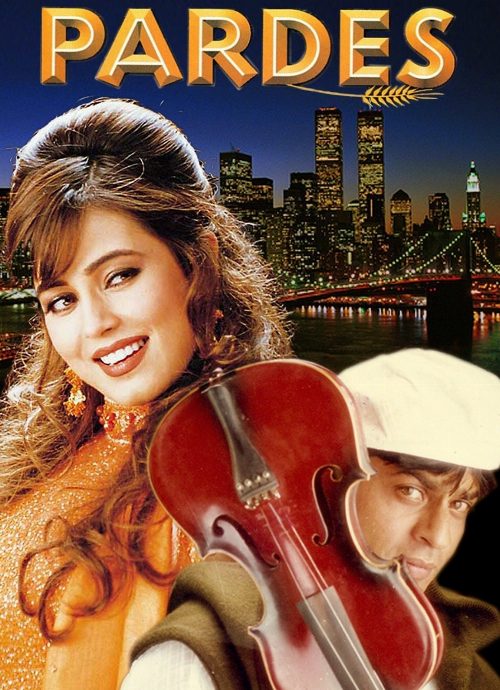
Pardes(1997)
About Pardes
Kishorilal wants an Indian bride for his westernised son. He gets him engaged to Ganga, his friend's daughter, and brings her to USA. But she shares a deeper bond with Arjun, Kishorilal's foster son.
Few cinematic works capture the late nineties tension between traditional Indian values and the allure of life abroad quite like Subhash Ghai’s grand musical drama. At a time when the Hindi film industry was aggressively expanding its global footprint, this story arrived as a poignant exploration of cultural dislocation. It centers on the clash between a wealthy patriarch living in America who pines for a traditional daughter-in-law and the reality of the next generation, who have grown up far removed from their ancestral roots. By weaving together themes of national identity and familial duty, the narrative presents a classic tug-of-war between the emotional pull of one's homeland and the modern pressures of an overseas existence.
The film is anchored by a compelling performance from Shah Rukh Khan, who portrays a man caught in the middle of these generational expectations. His chemistry with newcomer Mahima Chaudhry provides the emotional core of the story, elevating the premise from a standard romantic triangle into something that feels more like a meditation on belonging. For viewers who enjoy nostalgic nineties cinema, this production offers a quintessential look at how Bollywood interpreted the diaspora experience during a period of rapid economic liberalization. It serves as a fascinating time capsule of how the industry balanced high-gloss production values with deeply conservative social messaging, making it a pivotal entry in the director’s acclaimed filmography.
Modern audiences who appreciate character-driven dramas that prioritize emotional stakes over mere spectacle will find much to admire here. The music remains a standout element, effectively punctuating the internal conflicts of the protagonists as they navigate the complexities of love and obligation. While the film is undeniably a product of its era, its questions regarding whether one can truly retain their cultural soul while living in a foreign land remain surprisingly relevant. It is a must-watch for those interested in the evolution of the Indian protagonist in cinema, particularly those who want to see how early globalized narratives helped shape the diverse landscape of contemporary Hindi storytelling. Whether you are a dedicated fan of the lead actor or simply a student of how regional cinema interacts with international themes, this piece remains a significant milestone in the history of mainstream Indian entertainment.
Cast(15)