
About Passage of Venus
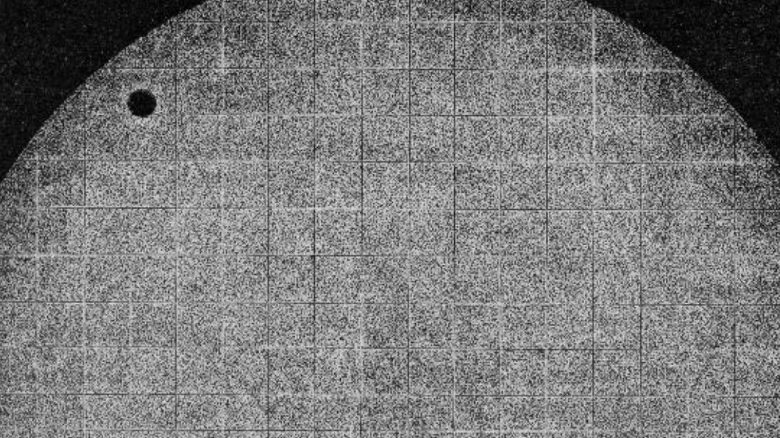
Photo sequence of the rare transit of Venus over the face of the Sun, one of the first chronophotographic sequences. In 1873, P.J.C. Janssen, or Pierre Jules César Janssen, invented the Photographic Revolver, which captured a series of images in a row. The device, automatic, produced images in a row without human intervention, being used to serve as photographic evidence of the passage of Venus before the Sun, in 1874.
Before the dawn of modern cinema, scientists were already chasing the ghost of movement across the sky, turning the heavens into a canvas for mechanical curiosity. Passage of Venus is a fascinating artifact that sits at the intersection of rigorous astronomy and the primitive birth of the moving image. Captured in 1874, this short sequence remains a cornerstone of film history, representing an era where the camera was viewed not as a tool for storytelling, but as a precise instrument for documenting natural phenomena that the human eye could barely process in real time. For students of Indian cinema who appreciate the evolution of visual language, this work serves as a reminder that the cinematic medium began with the noble, if clinical, desire to freeze and analyze the rhythm of the cosmos.
The technical brilliance behind this project lies in the invention of the photographic revolver, a device designed to automate image capture long before the term frame rate entered our vocabulary. Director Francisco Antonio de Almeida Junior highlights how this automated process effectively bypassed the limitations of human perception to deliver evidence of a rare planetary alignment. In the context of contemporary global film trends, where digital manipulation is the norm, there is a refreshing purity in watching a piece of history that relies entirely on mechanical ingenuity and the raw physics of light. It stands as a testament to the early ambition of capturing the unseeable, a pursuit that continues to drive filmmakers who push the boundaries of what a camera can capture.
This documentary is essential viewing for anyone interested in the foundational mechanics of the film industry, particularly those who study how technological innovation dictates creative possibilities. While today we are accustomed to the sprawling narratives of Telugu or Hindi blockbusters, this film offers a meditative pause, inviting viewers to appreciate the sheer audacity required to point a lens at the sun in the nineteenth century. It is a work for history buffs and cinephiles who want to trace the lineage of motion photography back to its source. By stripping away the spectacle of modern editing, the film allows us to confront the origins of our obsession with motion, proving that the most compelling dramas are sometimes found in the silent, steady mechanics of the universe itself.
Crew
Similar Films