
About Possible Loves
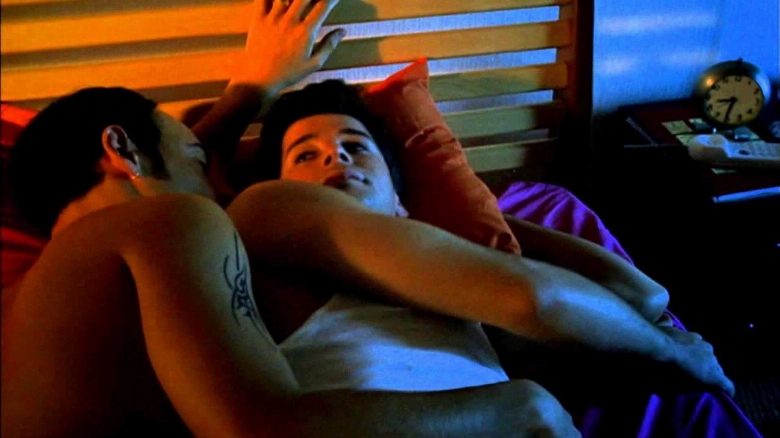
Fifteen year ago, Carlos went to the cinema to meet Júlia, his university colleague with whom he was in love. She never showed up. Carlos was left waiting in the lobby alone. While he waits, something happens which will change his life. A scene, an encounter, an unfinished sentence... Something insignificant, but which will determine the character's life. Fifteen years later, we follow three completely different versions of Carlos's life. In one, he is a man divided between the stability of a secure life in a lukewarm marriage, and the growing desire to live a great love affair. In the second, he is homosexual and places passion above all else. In the third possible life, Carlos is a man who hasn't yet discovered love, and lives through successive disastrous relationships in search of the perfect woman. One of them is his real life. Another is not his life. And a third is the life he'd like to lead. Which is his true life ?
The concept of the butterfly effect has long fascinated filmmakers, but few projects capture the poignant fragility of missed connections quite like Possible Loves. Directed by Sandra Werneck, this Brazilian drama elevates the classic what if premise by anchoring it in the universal melancholy of a single afternoon spent waiting at a movie theater. By splintering the protagonist into three distinct trajectories based on a single moment of abandonment, the film functions as a cinematic meditation on how the smallest pivots of fate dictate the architecture of our existence. It offers a sophisticated departure from the high-octane narratives often prioritized in contemporary global cinema, choosing instead to lean into the quiet, messy reality of personal growth and emotional longing.
For audiences who appreciate the layered storytelling found in modern international dramas, this work serves as an essential case study in character-driven narratives. Murilo Benício delivers a nuanced performance that anchors these disparate realities, portraying a man who is simultaneously content, tormented, and searching. Whether he is navigating the stifling comfort of a conventional marriage, exploring the intensity of a queer identity, or wandering through a series of fleeting romantic encounters, the core of his character remains a search for meaning. The film resonates deeply with viewers who find themselves pondering the paths not taken, making it a thoughtful watch that transcends its specific cultural setting to address the human condition.
Werneck demonstrates a masterful control over tone, ensuring that each of the three versions of Carlos feels distinct yet unified by an underlying sense of yearning. While the film originates from a different geographic and linguistic landscape than the regional industries of India, its exploration of destiny and domesticity will feel remarkably familiar to fans of introspective South Asian cinema. Just as many Telugu or Malayalam filmmakers utilize romantic tropes to dissect societal expectations, this feature uses its tripartite structure to challenge the idea of a fixed identity. It is a compelling choice for cinephiles who prioritize philosophical inquiry over spectacle, proving that the most dramatic shifts in a person’s story often occur in the quiet spaces between decisive events. By inviting the audience to distinguish between the life lived, the life feared, and the life imagined, the narrative sustains a gripping intellectual tension that lingers well after the final frame.
Cast(14)