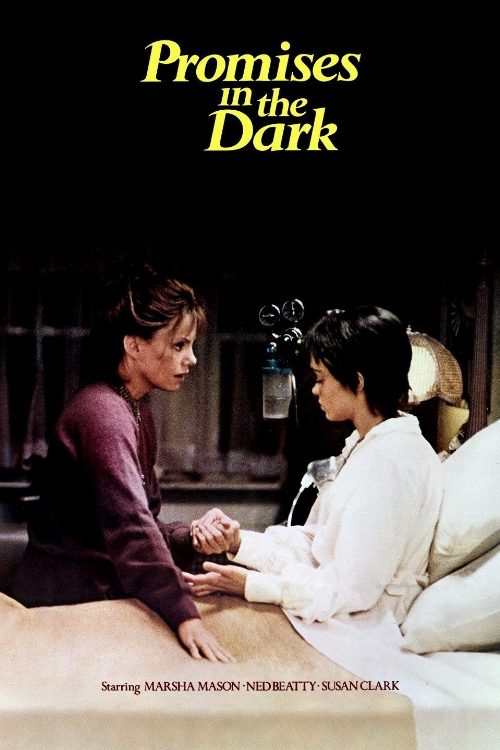
About Promises in the Dark
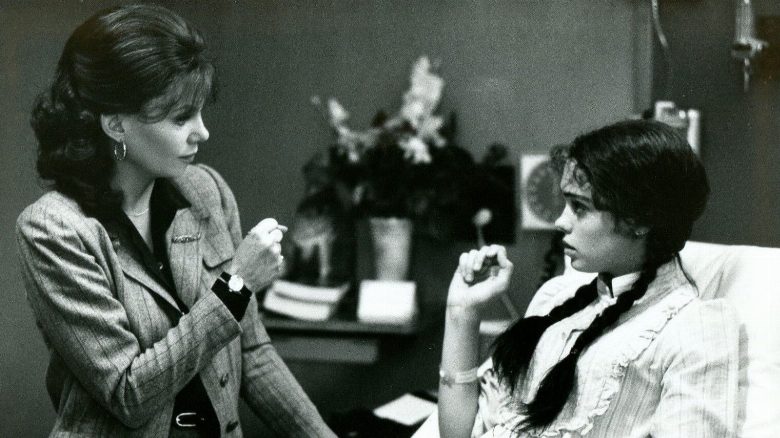
A young doctor, Alexandra Kendall, seeking change while recovering from a recent heartbreak, moves from Chicago, Illinois to Hartford, Connecticut. She joins the West Hartford medical practice of Dr. Walter McInterny, a doctor approaching retirement age. 17-year-old Elizabeth "Buffy" Koenig is a precocious student at West Hartford's William Hall High School. Her boyfriend Gerry is a football player at Hall High. While Dr. McInterny is away on vacation, longtime patient Buffy hurts her leg while harmlessly kicking a soccer ball during Gerry's nearby football practice. At the hospital, Dr. Kendall finds that not only is the leg broken, but the bone was also weakened by cancer. Dr. Kendall treats Buffy and the two develop a bond that extends beyond the doctor-patient relationship; Dr. Kendall is drawn to Buffy's humor and raw honesty.
Jerome Hellman pivoted from his successful career as a producer to the director chair for this poignant 1979 character study, a film that captures the fragile intersection of professional duty and human vulnerability. Unlike many medical dramas of the era that focused on procedural spectacles or clinical detachment, Promises in the Dark anchors itself in the developing friendship between a young physician and her spirited teenage patient. By choosing to highlight the emotional weight of a terminal diagnosis rather than just the medical mechanics, the movie creates a space for Marsha Mason to deliver a performance defined by quiet strength and intellectual empathy. It serves as a fascinating relic of late seventies American cinema, reflecting a moment when the industry was deeply invested in exploring intimate, domestic dramas that prioritized internal character growth over explosive plot devices.
The narrative gains its distinctive flavor from the way it navigates the transition from professional mentorship to a more personal connection. When Dr. Alexandra Kendall, portrayed by Kathleen Beller, arrives in a new city to escape her own past, she finds her life irrevocably altered by a routine examination that turns into a life-changing crisis for Susan Clark’s character, Buffy. For viewers who appreciate the slow-burn storytelling often found in contemporary Malayalam or independent Indian cinema—where the focus rests firmly on the nuances of human relationships and the ethical dilemmas faced by individuals—this film offers a compelling study in compassion. It eschews the melodrama that often accompanies illness-focused narratives, opting instead for a grounded look at how people find courage when confronted with the incomprehensible.
Audiences who enjoy character-driven explorations of grief and resilience will find this film particularly resonant. It functions as a precursor to the modern genre of medical dramas that emphasize the doctor-patient bond, yet it maintains a distinct vintage aesthetic that feels both raw and authentic. The film is essential viewing for those interested in the filmography of Jerome Hellman, as his background in producing socially conscious works clearly informs the sensitive handling of the subject matter here. By focusing on the interplay between a seasoned mentor and a young woman facing the twilight of her youth, the story creates a universal dialogue about the promises we make to one another when the future is no longer a certainty. It is a thoughtful, sobering piece of work that remains relevant for its honest depiction of how we sustain hope in the face of inevitable loss.
Cast(9)