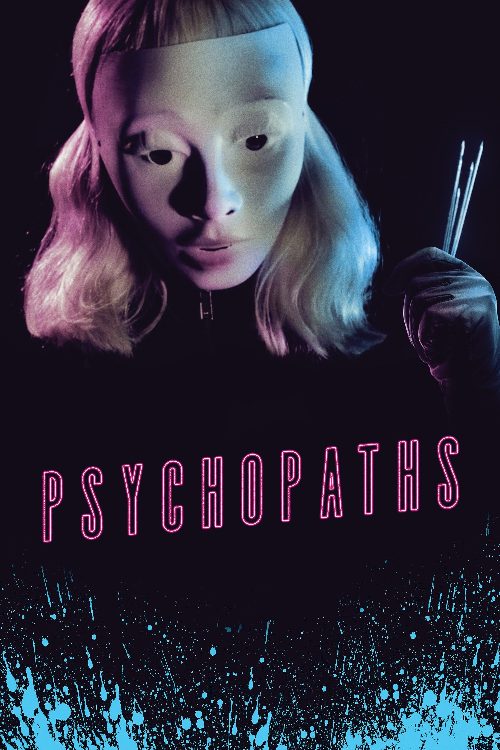
About Psychopaths
An executed serial killer, an escaped mental patient, a beautiful seductress, a crazed strangler, and a masked murderer unleash blood-soaked mayhem over the course of one night.
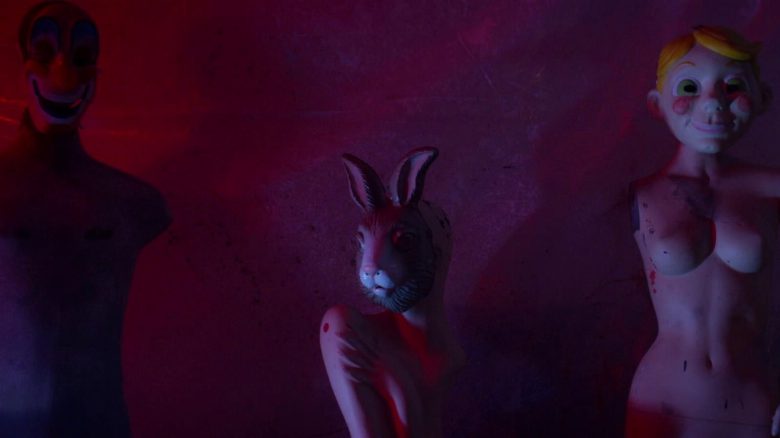
Mickey Keating has carved out a distinct niche in modern independent horror by channeling the kinetic, grindhouse energy of the seventies into contemporary nightmares. In his 2017 feature Psychopaths, he ventures into a chaotic anthology-style narrative that feels less like a traditional slasher and more like a fever dream of systematic violence. By stripping away the comfort of a singular protagonist, the film invites the audience to observe a mosaic of malevolence. It is a stylistic exercise that prioritizes mood and sensory overload over conventional storytelling, echoing the experimental grit found in underground cult classics. The project stands out for its commitment to a specific aesthetic, where the neon-drenched cinematography and jarring editing choices serve to heighten the instability of the characters drifting through a singular, hellish evening.
While the landscape of global cinema is currently dominated by high-concept supernatural thrillers and socially conscious dramas, Psychopaths remains a curious outlier that leans heavily into the visceral nature of the genre. For viewers who appreciate the stylistic evolution of independent American horror, this film serves as a testament to the power of low-budget ingenuity. It does not attempt to reinvent the wheel but rather seeks to push the boundaries of how much kinetic energy a single frame can hold. Those who admire the work of directors like Rob Zombie or the relentless pacing of early exploitation cinema will likely find the film to be an intriguing, albeit intense, experiment in thematic dissonance. It is a work designed for the dedicated genre enthusiast, one that demands a tolerance for stylized brutality and unconventional narrative structures.
The performances, particularly by Ashley Bell and James Landry Hebert, are central to maintaining the film’s high-octane momentum. By tasking these actors with embodying archetypes of madness, Keating explores the thin line between a calculated persona and genuine psychological disintegration. The film functions as a dark carnival of human depravity, challenging the viewer to find meaning within the carnage. It is not a movie for those seeking a traditional hero arc or a comforting resolution, but rather for those who view film as a medium for pure, unfiltered stylistic expression. As a piece of independent horror, it occupies a space that is both abrasive and undeniably memorable, proving that even within a crowded market of slashers, a singular directorial vision can still carve out a territory of its own.
Cast(13)