
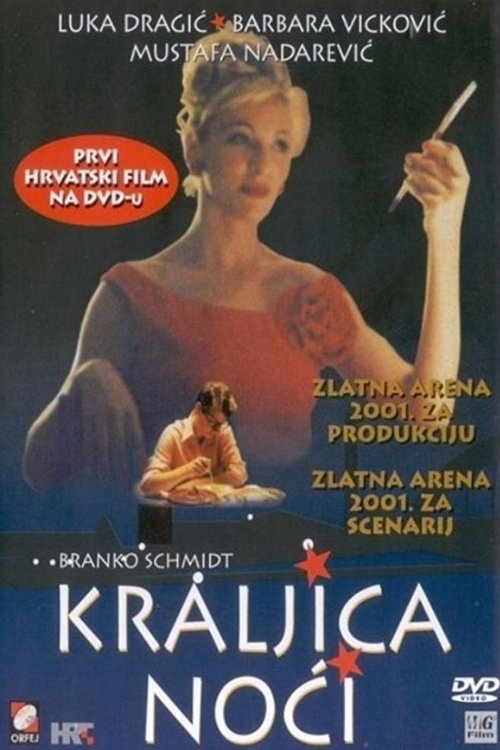
About Queen of the Night
The story takes place in Osijek in 1968. Seventeen-year-old Tomo is the greatest hope the town of Osijek has for winning the Junior Cup of Yugoslavia. Josip Broz Tito himself is expected to come to Osijek to open the competition. Nevertheless, Tomo is more interested in girls than in rowing. The beautiful prostitute Betika and a lovely girl named Jasna have captured his heart. Unfortunately, he has impotence issues of which even his doctors are unaware. Therefore, is unable to realize his sexual fantasies. Finally, he ends up in a hospital where local members of the political elite persuade him to compete in the cup. These pressures come to a head when his father is taken to prison as a political suspect.
Set against the backdrop of the volatile Yugoslavian social landscape in 1968, Queen of the Night offers a poignant look at the collision between individual aspiration and the heavy hand of state ideology. Director Branko Schmidt crafts a narrative that feels both deeply intimate and broadly political, focusing on a young rowing prodigy whose life is dictated by forces far beyond his control. While the film is rooted in a specific European history, the tension between personal desire and societal duty is a universal theme that often resonates with the complex family dramas found in contemporary Indian cinema, where the weight of parental expectations frequently mirrors the rigid structures seen in this period piece.
The story centers on Tomo, a teenager whose singular focus on romance and adolescent discovery is constantly interrupted by his role as the local sporting hero. His struggle is framed by the impending arrival of state leadership, a pressure that turns a simple athletic competition into a symbolic trial of loyalty. What makes this film stand out is its refusal to simplify the protagonist into a mere symbol of youth; instead, it explores his internal vulnerabilities and private anxieties with a refreshing level of empathy. By placing the narrative in a town waiting for the gaze of a dictator, the film captures the pervasive unease of living under a regime where even the most routine activities are imbued with political significance.
Audiences who appreciate character-driven dramas that balance coming-of-age vulnerability with historical gravity will find much to admire here. It is a film for those who prefer their historical dramas to be textured with human frailty rather than just grand events. Luka Dragic delivers a performance that captures the restlessness of a young man trapped between his own biological limitations and the soaring expectations of his community. As the plot unfolds and his father faces the harsh realities of political persecution, the film evolves into a compelling study of how the personal becomes political. It is a thoughtful exploration of how a young man manages to navigate a path toward maturity while the world around him demands nothing less than absolute perfection and total conformity to a failing system.
Cast(15)