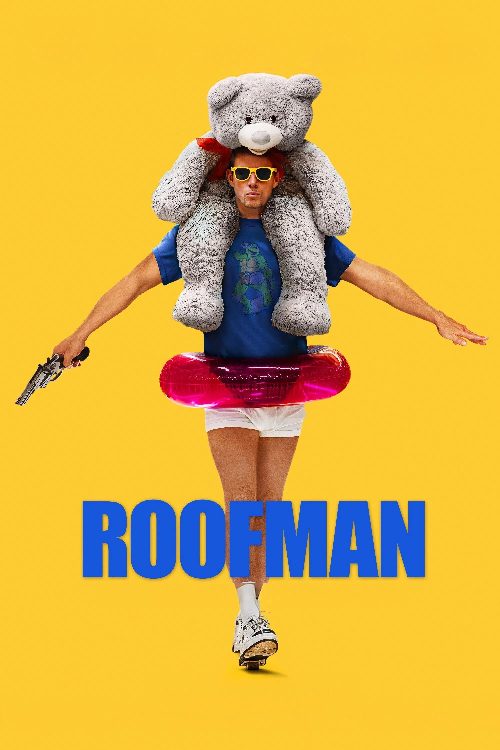
About Roofman
A former Army Ranger and struggling father turns to robbing McDonald’s restaurants by cutting holes in their roofs, earning him the nickname "Roofman." After escaping prison, he secretly lives inside a Toys “R” Us for six months, surviving undetected while planning his next move. But when he falls for a divorced mom drawn to his undeniable charm, his double life begins to unravel, setting off a compelling and suspenseful game of cat and mouse as his past closes in.
The criminal landscape of modern American cinema often leans toward the gritty or the overly stylized, but Roofman arrives with a bizarre, true-crime-infused premise that feels plucked from a dark comedy fever dream. Directed by Derek Cianfrance, the film tracks the improbable trajectory of a desperate man who trades his military background for a series of high-stakes heists that rely more on architectural ingenuity than brute force. By targeting fast-food outlets through their ceilings, the protagonist crafts a peculiar criminal identity that captivates the public imagination while simultaneously highlighting the fragility of his own domestic aspirations. It is a fascinating pivot for an industry that has recently been dominated by high-octane action spectacles, offering instead a character study that balances the absurdity of living in a toy store with the genuine tension of a man running from his own shadow.
For audiences accustomed to the hyper-kinetic energy of current South Indian blockbusters, where larger-than-life heroes often defy physics, this film offers a grounded yet equally surreal alternative. While it lacks the traditional song-and-dance numbers that define many of the major regional industries in India, the core emotional arc regarding a father’s struggle to reconnect with his family resonates on a universal frequency. LaKeith Stanfield, whose ability to embody complex, unpredictable figures is well-documented, brings a layer of vulnerability to a role that could have easily been played as a one-note villain. His performance, paired with the atmospheric direction of Cianfrance, turns what could be a straightforward procedural into a deeply human exploration of how far a person will go to reclaim a sense of normalcy when their life has already spiraled out of control.
This project is positioned to appeal to viewers who appreciate the intersection of dark humor and psychological suspense, particularly those who gravitate toward films that examine the hidden lives of societal outsiders. It is less about the mechanics of the robbery and more about the strange, lonely existence of someone who chooses to inhabit a commercial space long after the lights go out. As the narrative progresses, the tension mounts not just from the inevitable pursuit by the authorities, but from the encroaching reality of a romance that forces the protagonist to confront the hollowness of his own choices. It is a compelling choice for fans of character-driven dramas who are seeking a story that feels both intimately small and impossibly massive in its implications.
Cast(44)