About Rushmore
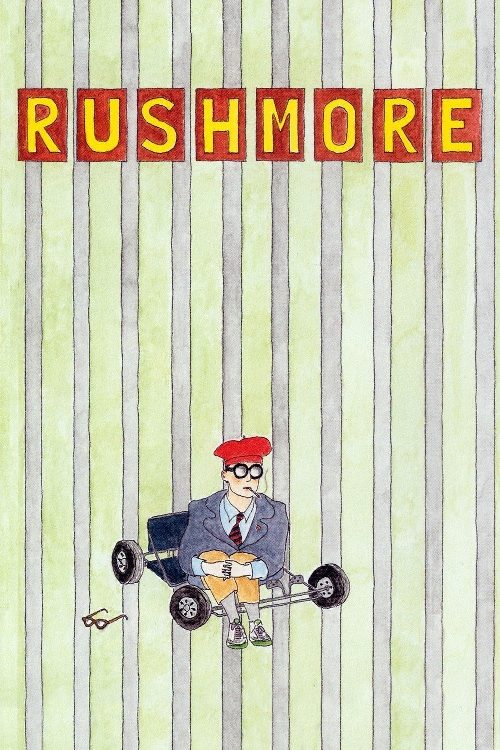
When a beautiful first-grade teacher arrives at a prep school, she soon attracts the attention of an ambitious teenager named Max, who quickly falls in love with her. Max turns to the father of two of his schoolmates for advice on how to woo the teacher. However, the situation soon gets complicated when Max's new friend becomes involved with her, setting the two pals against one another in a war for her attention.
Wes Anderson established his signature aesthetic with Rushmore, a film that remains the definitive blueprint for the quirky, deadpan coming of age narratives that have since become a staple of global independent cinema. While audiences familiar with the high octane energy of contemporary Telugu or Hindi commercial hits might find the pacing here deliberately understated, the film offers a masterclass in character study that transcends its nineties origins. At its core, the story follows a precocious and academically struggling student who finds his world upended by a crush on a new faculty member. His attempt to orchestrate a sophisticated courtship leads him to form an unlikely alliance with a wealthy industrialist, creating a strange mentor dynamic that anchors the film’s emotional stakes.
The brilliance of this production lies in how it frames the inherent awkwardness of youth against the backdrop of an elite, rigid institution. By leaning into the eccentricities of its lead protagonist, the film manages to feel both timeless and deeply specific. For viewers who appreciate the layered storytelling often found in the best Malayalam dramas, where the focus remains steadfastly on human frailty and interpersonal friction, Rushmore provides a similar depth of feeling. It avoids the broad strokes of typical teenage comedies, opting instead for a bittersweet, stylized approach that emphasizes the disconnect between how we perceive ourselves and how others view us. The tension that arises when the young boy and his older patron become rivals is handled with a dry, ironic wit that defines the director’s distinct voice.
This film is essential viewing for anyone interested in the evolution of modern comedy, particularly those who enjoy narratives that balance heartache with absurdity. It serves as a stark contrast to the sprawling scale of modern blockbusters, proving that a compelling conflict can be contained within the halls of a single school. Those who follow international cinema will recognize the early seeds of a visual style that has influenced filmmakers across the globe, including various directors working within the Indian film industries who experiment with color palettes and symmetrical framing. Rushmore is not merely a nostalgia piece but a sharp, observant look at the desperation of wanting to belong. It remains a standout entry in the genre, perfectly capturing the moment when childhood ambition crashes headlong into the complexities of adult desire, making it a rewarding experience for cinephiles who value precision and character-driven storytelling above all else.
Cast(51)