
Six Men Getting Sick(1967)
About Six Men Getting Sick
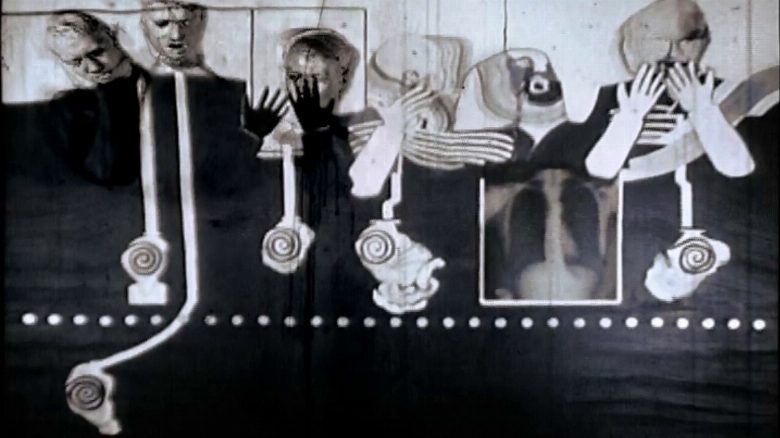
Lynch's first film project consists of a looping animation of six people vomiting projected on to a special sculptured screen featuring twisted three-dimensional faces.
Long before he became a master of surrealist dread and subconscious exploration, David Lynch embarked on a visceral experimental journey that would define his entire artistic trajectory. His debut project, Six Men Getting Sick, serves as a primitive yet potent manifesto for the avant-garde sensibilities that would later permeate his celebrated filmography. By projecting a short, repeating sequence of figures suffering from physical distress onto a contoured, three-dimensional canvas, Lynch moved beyond the constraints of traditional flat cinema. This early venture captures the raw anxiety and tactile discomfort that fans of his later work will immediately recognize as the bedrock of his unique aesthetic language.
While modern audiences accustomed to the polished visual palettes of contemporary Hollywood or the vibrant, high-concept spectacles emerging from the Indian film industries might find this short jarring, its historical value remains immense. It represents a foundational moment in independent experimental animation, bridging the gap between fine art installation and narrative filmmaking. For viewers who appreciate the darker, more abstract corners of cinema, this piece offers a rare glimpse into a director finding his voice through pure, unfiltered sensory provocation. It is not a film designed for mainstream comfort but rather a bold statement on the intersection of human fragility and mechanical repetition.
The significance of this work lies in how it forces the audience to engage with the screen as a physical object rather than a mere window into a story. Lynch demonstrates an early preoccupation with the grotesque and the cyclical nature of human suffering, themes that would eventually evolve into the complex psychological labyrinths found in his later features. Those interested in the history of underground filmmaking or the origins of artistic visionaries will find this project essential viewing. It stands as a stark reminder that even the most ambitious directors often begin their careers by challenging the very definitions of what constitutes a moving picture, utilizing minimal resources to create an indelible, haunting impact that lingers long after the loop concludes.