About Society for Sale
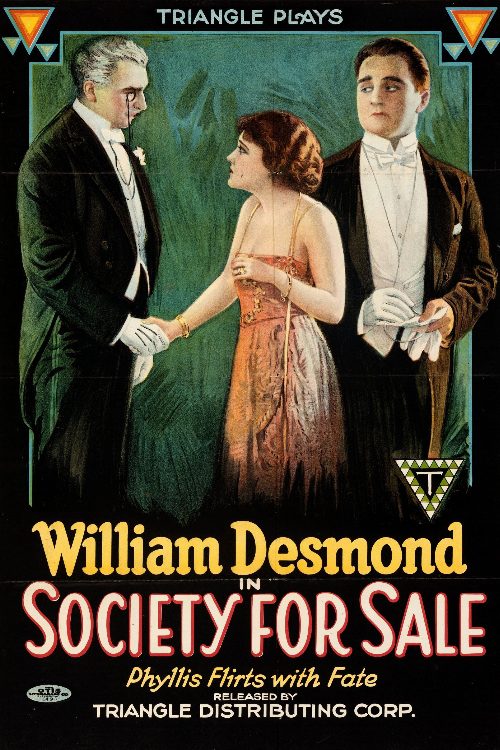
Successful model, Phyllis Clyne, convinces a down-and-out nobleman, Billy, to pass her off in society as titled gentry. They fall in love and when it turns out that her late father actually was a lord, they decide they now can marry.
Long before the modern fascination with social mobility and the art of reinvention took hold of global cinema, Frank Borzage explored the fragility of class structures in the 1918 drama Society for Sale. This silent era production captures a quintessential rags-to-riches aspiration, centering on a charismatic model who orchestrates a daring gamble to infiltrate the upper echelons of high society. By enlisting an impoverished aristocrat as her accomplice, she attempts to manufacture a pedigree that will grant her access to circles previously barred by her modest background. It is a premise that resonates surprisingly well with contemporary audiences, mirroring the themes of performative identity and the desperate desire for status that frequently drive storylines in current Indian regional dramas, particularly those exploring the intersection of caste, class, and ambition in Hindi or Telugu cinema.
The film serves as a compelling case study for those interested in the evolution of romantic tropes in early American filmmaking. Borzage, who would go on to become a master of capturing intimate human emotions on screen, utilizes the silent medium to emphasize the body language and unspoken tension between the leads. Gloria Swanson, in one of her early roles, embodies a fierce determination that elevates the character beyond a mere social climber. Her performance is anchored by the chemistry she shares with her partner in deception, creating a dynamic that feels both calculated and genuinely vulnerable. Viewers who appreciate historical cinema or the architectural foundations of the romantic drama will find this a fascinating watch, especially as it highlights how the yearning for upward mobility has been a universal cinematic hook for over a century.
What makes this work stand out today is its refusal to paint the protagonist solely as a villain or a victim. Instead, the narrative leans into the blurred lines between ambition and survival, forcing the audience to root for a woman who is essentially committing fraud to secure her place in the world. As the plot unfolds, the tension shifts from the excitement of the heist to the complications of genuine affection, posing a timeless question about whether love can truly survive once the masks are stripped away. For fans of classic Hollywood who enjoy a blend of sophisticated wit and emotional weight, this production remains a notable example of how filmmakers have long interrogated the arbitrariness of societal labels and the lengths individuals will go to find belonging.