Sorority House Massacre II(1990)
About Sorority House Massacre II
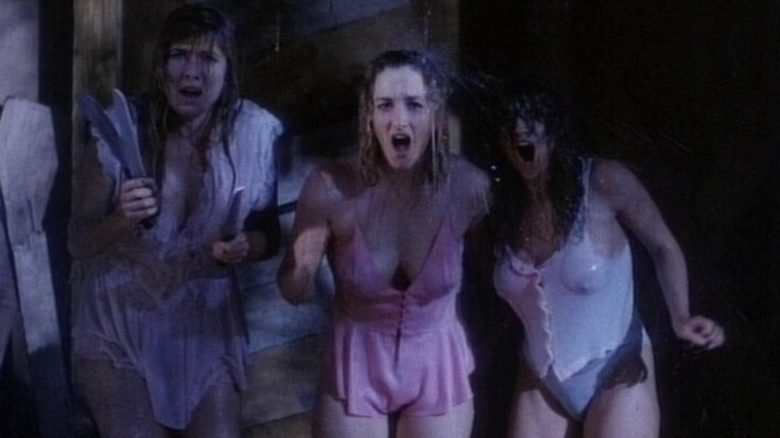
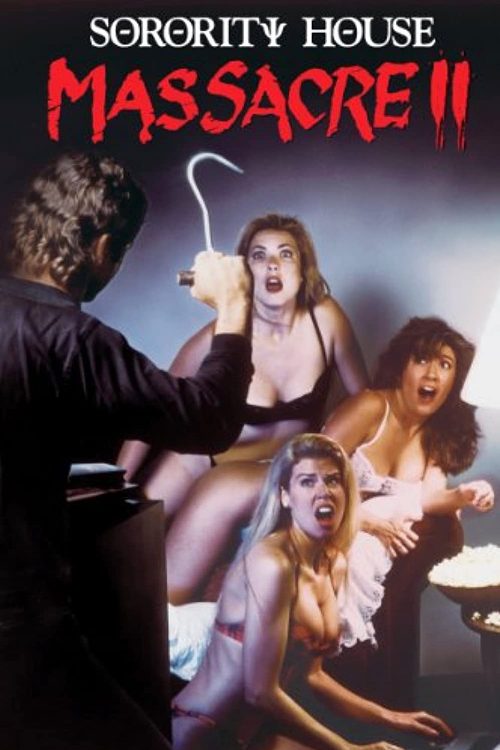
Five college women buy the old Hokstedter place for their new sorority house. They got it cheap because of the bloody incidents from five years before. They decide to stay in it for the night so they can meet the movers in the morning, but begin to get the creeps when the weird neighbor Orville Ketchum starts poking around. Shortly after the women take showers and consult a Ouija board they begin experiencing an attrition problem.
Stepping into the neon-soaked aesthetic of late eighties and early nineties low-budget cinema, Sorority House Massacre II functions as a curious artifact of a time when slasher tropes were being rapidly recycled into self-aware camp. While the Indian film industry often leans into heightened melodrama and grand emotional stakes, this particular slice of American genre fare opts for a lean, claustrophobic approach that prioritizes atmosphere over narrative complexity. By centering its premise on a group of students moving into a property with a grim history, the film leans heavily into the classic isolationist horror beats that have fascinated global audiences for decades, yet it injects a specific brand of irreverent humor that separates it from the grim psychological thrillers currently dominating streaming platforms.
The narrative momentum builds around the naive decision of these young women to spend a night in a dwelling shadowed by past violence, a setup that will feel intimately familiar to fans of the slasher subgenre. What makes this entry stand out is its commitment to the inherent absurdity of its situation, balancing the suspense of an encroaching supernatural or human threat with the eccentricities of local characters like the prying neighbor. For viewers who enjoy dissecting the evolution of horror cinema, the film offers a fascinating look at the shift toward blending comedic undertones with traditional scares. It serves as a reminder of an era when filmmakers relied on practical tension rather than digital effects to unsettle their audience, creating a distinct visual shorthand that remains recognizable to genre enthusiasts today.
For the modern cinephile, this production is best viewed as a nostalgic time capsule that captures the specific energy of direct-to-video horror. Those who appreciate the rhythmic pacing of regional Indian thrillers might find the structural brevity of this film refreshing, as it avoids sprawling subplots in favor of a straightforward descent into chaos. While it may not possess the sprawling ambition of a blockbuster, its charm lies in its unapologetic adherence to the rules of its category. Whether one is watching for the historical significance of the slasher cycle or simply seeking a lighthearted fright, this movie occupies a unique position as a bridge between the visceral terror of the eighties and the more stylized, ironic horror that would define the following decade. It is a quintessential recommendation for anyone looking to explore the quirks of mid-budget American cult cinema.
Cast(21)