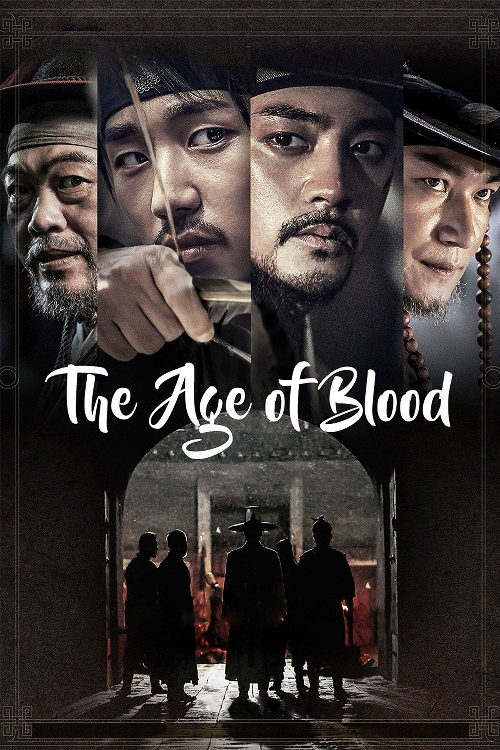
About The Age of Blood
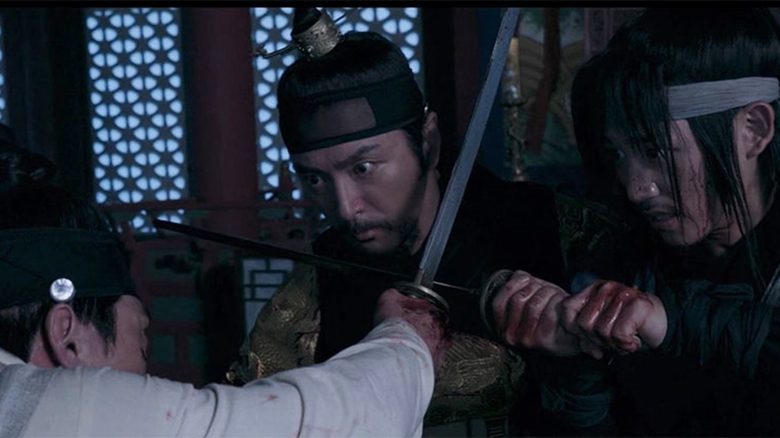
Ancient Korea, 1728. Swordsman Kim Ho, guard of King Yeong-jo of Joseon, is demoted and sent to work in Uigeumbu prison. When night falls, the prison is assaulted by the master warrior Do Man-cheol and his powerful henchmen for the purpose of freeing Lee In-jwa, who has been condemned to death for rising up in revolt against the king.
The Age of Blood transports audiences to the volatile political landscape of eighteenth-century Joseon, where the sanctity of a high-security detention facility becomes the stage for a brutal test of loyalty. Rather than focusing on grand battlefield maneuvers, the narrative narrows its scope to a claustrophobic, high-stakes standoff between a disgraced royal protector and a band of lethal insurgents intent on rescuing a high-value prisoner. This shift toward contained, visceral combat sequences offers a refreshing change of pace for fans of historical dramas who are accustomed to sweeping war epics. By anchoring the tension within the dark, stone-walled confines of the prison, the film prioritizes character-driven choreography and raw survival instincts over traditional period-piece tropes.
For viewers who appreciate the gritty, grounded action styles seen in recent hits from the South Korean film industry, this production serves as a compelling study in suspenseful pacing. The film leans heavily into the kinetic energy of its protagonist, Kim Ho, whose fall from grace provides a relatable emotional core beneath the armor and steel. As the night descends and the facility is infiltrated by a group of highly skilled assassins, the story evolves into a relentless survival struggle that demands absolute focus from its lead character. Kim Ji-hoon delivers a performance that emphasizes the physical toll of his duty, effectively capturing the fatigue and determination of a man fighting to redeem his tarnished reputation under the most harrowing circumstances imaginable.
This project stands out by stripping away the typical courtly intrigue of the era to highlight the sheer lethality of its combatants. It is ideally suited for fans of stylized martial arts cinema who enjoy watching tactical ingenuity play out in tight spaces. While many historical films from this region dedicate excessive time to political exposition, this feature wisely keeps the momentum high, ensuring that the stakes remain immediate and personal. Whether it is the clash of traditional weaponry or the desperate hand-to-hand maneuvers, the choreography reflects a brutal reality that aligns with the darker tone of the Joseon period. It is a taut, atmospheric experience that proves how effectively a localized conflict can mirror the broader instability of a kingdom on the brink of chaos.
Cast(24)