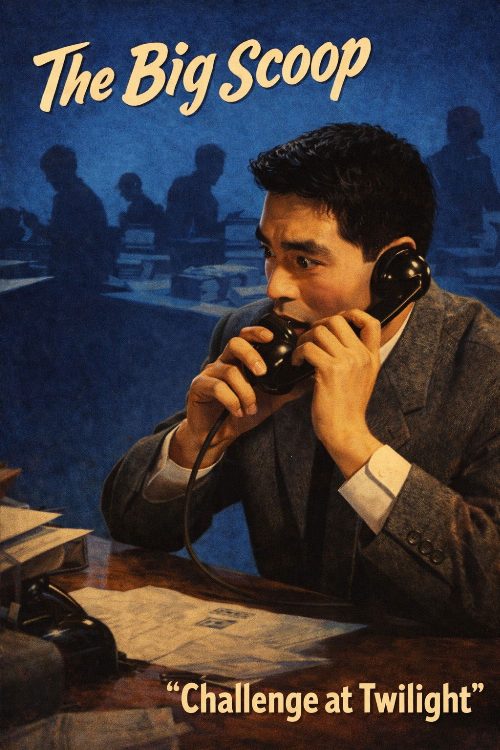
About The Big Scoop: Challenge at Twilight
What starts as a simple request for correction of a newspaper article uncovers a corruption case hidden behind what seemed like an ordinary traffic accident.
The mid-century Japanese cinematic landscape was often defined by its meticulous social observation, and The Big Scoop: Challenge at Twilight stands as a compelling bridge between traditional noir and the investigative procedural. While audiences familiar with the intense character studies of Indian regional cinema might find echoes of the journalistic grit seen in classic Malayalam investigative dramas or the investigative fervor of modern Telugu political thrillers, this 1959 production offers a distinctively crisp, post-war Japanese perspective. Directed by Shinji Murayama, the film captures a nation grappling with the friction between institutional power and the burgeoning influence of the press, framing a seemingly mundane clerical error as the first thread in a much larger tapestry of systemic deception.
The narrative hook revolves around a humble request to rectify a printed report, a premise that effectively mirrors the slow-burn tension found in works like the classic Hindi thriller Jaane Bhi Do Yaaro, where a small spark ignites a wildfire of revelation. By escalating a standard traffic mishap into a complex web of corruption, the film invites viewers to question the integrity of the information they consume daily. Hiroshi Minami brings a grounded, weary determination to the lead role, portraying a protagonist who is less of an action hero and more of a tenacious seeker of truth. This focus on the psychological toll of investigative work, rather than mere physical spectacle, is a hallmark of the period that keeps the story feeling remarkably relevant to contemporary audiences who navigate their own eras of media skepticism.
For those who appreciate the aesthetic sharpness of late fifties world cinema, this film serves as an excellent case study in how to build suspense through dialogue and atmosphere rather than reliance on quick cuts. It appeals particularly to fans of classic mystery who enjoy the methodical reconstruction of a conspiracy, where the satisfaction lies in the uncovering of hidden motives rather than explosive climaxes. Murayama manages to maintain a sense of urgency despite the deliberate pacing, ensuring that the stakes feel personal even as they expand to encompass wider societal failings. It is a quintessential piece of genre fiction that reflects the anxieties of its time while remaining accessible to any viewer who values a well-constructed puzzle and a narrative that rewards patience with genuine insight into the complexities of human ambition.
Crew
Music
Director
Director of Photography
Screenplay
Original Story
Similar Films