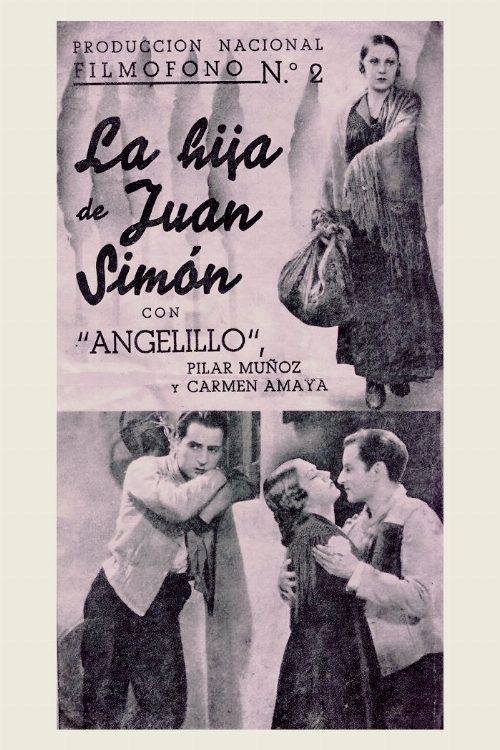
About The Daughter of Juan Simón
Carmen and Ángel are in love but her mother does not approve their relationship.
Stepping back into the mid-1930s offers a fascinating glimpse into the evolution of Spanish musical drama, a genre that frequently mirrors the emotional intensity found in classic Indian melodramas. The Daughter of Juan Simon remains a significant touchstone of its era, primarily because it serves as a magnetic showcase for the legendary flamenco dancer Carmen Amaya. By centering the narrative on the forbidden romance between a young woman and her suitor, the film taps into the universal tension between individual desire and rigid maternal opposition. This thematic framework will feel remarkably familiar to fans of contemporary regional Indian cinema, where the conflict between tradition and personal agency often serves as the heartbeat of the storytelling process.
What truly elevates this production beyond a standard period romance is its reliance on the visceral power of folk performance. For modern viewers, the film functions less as a conventional plot-driven exercise and more as an atmospheric time capsule. It captures a specific cultural moment where the lines between theatrical drama and musical expression were blurred, a practice that continues to define the high-octane emotional landscapes of Tamil and Telugu industries today. Those who appreciate the intersection of heritage arts and narrative cinema will find the sequences featuring Amaya to be the primary draw. Her presence commands the screen, transforming simple scenes of heartbreak into displays of immense artistic gravity that transcend the language barrier.
This piece of cinema is an essential watch for enthusiasts interested in the roots of global melodramatic traditions. While the pacing reflects the deliberate style of the 1930s, the underlying emotional stakes remain potent. It is positioned as a foundational work for those studying how music and dance are woven into the fabric of social commentary. Whether you are a scholar of Spanish film history or simply a cinephile looking to trace the lineage of the musical tragedy, this film provides a compelling window into a bygone aesthetic. By focusing on the interplay of song and sorrow, it manages to sustain its relevance, inviting audiences to reflect on how humanity has consistently used the arts to process the complexities of love and domestic conflict across different continents and decades.
Cast(16)