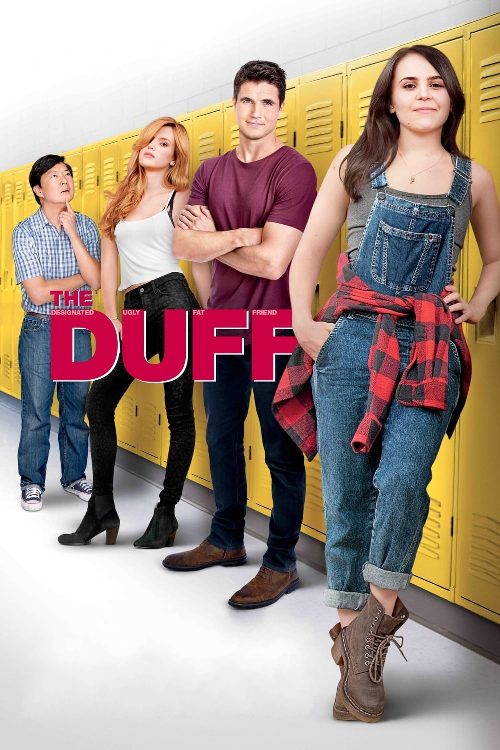
About The DUFF
Bianca's universe turns upside down when she learns that her high school refers to her as a ‘DUFF' (Designated Ugly Fat Friend). Hoping to erase that label, she enlists the help of a charming jock and her favorite teacher. Together they'll face the school's mean girl and remind everyone that we are all someone's DUFF… and that's totally fine.
High school hierarchies often feel like immutable laws of nature, yet few films tackle the absurdity of these social labels with as much sharp wit and self-awareness as The DUFF. While the teen comedy genre is saturated with tales of popularity contests and makeover montages, this 2015 release finds its footing by interrogating the specific, stinging shorthand students use to categorize their peers. By centering its narrative on the discovery of a cruel, acronym-based social standing, the film leans into the frantic energy of adolescent insecurity while simultaneously deconstructing the very idea of being a sidekick in one own life. It feels like a spiritual successor to the sharp-tongued classics of the nineties and early two thousands, providing a modern update that feels particularly relevant in an era defined by constant digital scrutiny and the pressure to curate a perfect public image.
The chemistry between the lead performers elevates what could have been a standard genre exercise into something far more engaging. Madeline Brumby brings a grounded vulnerability to the role of a student forced to reckon with an identity she never claimed, while the inclusion of seasoned talent like Allison Janney adds a layer of comedic gravitas that grounds the film’s more chaotic moments. For viewers who enjoy the lighthearted, fast-paced rhythms of contemporary romantic comedies but crave a story that acknowledges the harshness of teenage social dynamics, this film serves as an ideal bridge. It manages to balance the tropes of the jock-and-outsider dynamic with a surprisingly sincere message about self-acceptance that resonates beyond the hallways of a fictional high school.
In the broader context of global cinema, particularly when viewed through the lens of Indian film audiences who have a strong appetite for high-stakes campus dramas and coming-of-age narratives, this production offers a refreshing Western perspective on the universal struggle for belonging. While regional industries from Tollywood to Bollywood often explore these themes through a lens of familial expectation or socio-economic divides, this film keeps its focus squarely on the volatile ecosystem of the classroom. It is a perfect pick for moviegoers seeking a breezy yet thoughtful watch that avoids the typical melodrama of its peers. The film succeeds because it ultimately rejects the idea that we must fit into narrow boxes, instead encouraging the audience to embrace the qualities that make them different. It is a reminder that the labels we fear are often just reflections of someone else’s narrow worldview, rather than a true measure of our own potential.
Cast(48)