
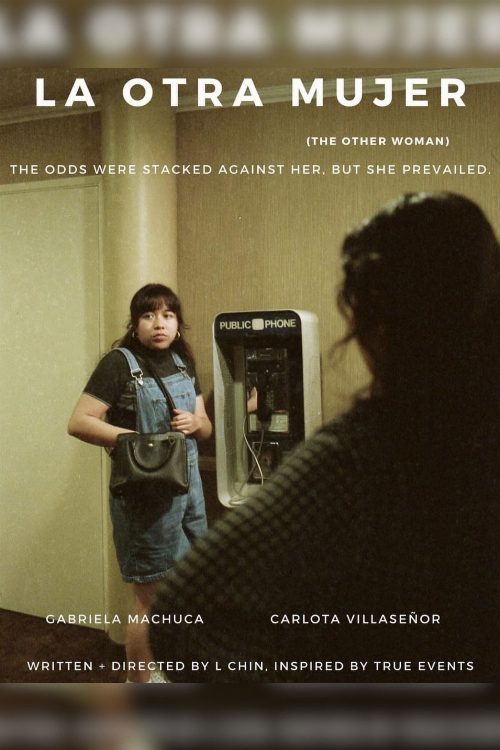
About The Other Woman
A young immigrant learns of her unexpected pregnancy. However, the father of her baby is not who she believes him to be.
Director L Chin brings a delicate, character-driven sensibility to The Other Woman, a 2023 drama that navigates the intersection of personal identity and the complexities of modern displacement. At the center of this narrative is a protagonist navigating the precarious balance of life as an immigrant, whose world is irrevocably altered by the discovery of an impending motherhood. While the premise touches on universal themes of parenthood, the film distinguishes itself by focusing on the fractured perception of intimacy. The story hinges on a profound revelation regarding the paternity of the child, forcing the lead character to confront the reality that her understanding of her closest relationships may be built on a foundation of hidden truths. It is a quiet, contemplative piece that prioritizes internal tension over spectacle, marking a departure from the high-octane storytelling often prioritized in global cinema markets.
For audiences accustomed to the intricate family dynamics frequently explored in Malayalam and Tamil cinema, where emotional stakes are often tied to legacy and social standing, this film offers a fascinating cross-cultural parallel. The Other Woman avoids the typical tropes of melodrama, instead opting for a clinical, almost observational style that highlights the isolation often felt by those living far from their ancestral homes. Trung To delivers a performance that relies heavily on subtle shifts in demeanor, capturing the quiet desperation of someone whose autonomy is suddenly caught between past secrets and future responsibilities. This is not a film designed for those seeking easy resolutions or fast-paced plot twists, but rather for viewers who appreciate the slow-burn psychological depth found in contemporary independent dramas.
By stripping away the artifice of a traditional romantic setup, the film positions itself as a study of agency and self-discovery. It is particularly relevant for viewers who enjoy stories that challenge the conventional definitions of motherhood and betrayal. The narrative structure invites the audience to piece together the protagonist's history alongside her, making the experience of watching the film feel remarkably intimate and personal. As the industry continues to evolve, films like this serve as a vital reminder that the most compelling conflicts are often those that occur behind closed doors, within the private sphere of the immigrant experience. The Other Woman stands as a poignant contribution to this year's cinematic landscape, proving that a well-crafted script and a singular vision remain the most powerful tools in storytelling.