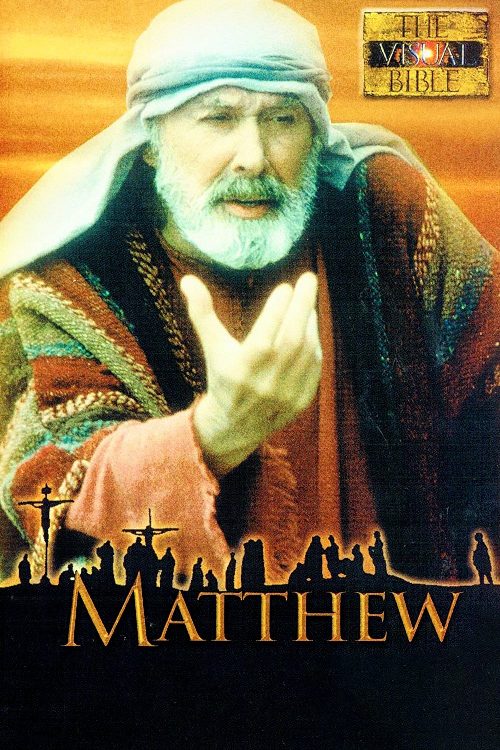
The Visual Bible: Matthew(1993)
About The Visual Bible: Matthew
The only dramatization using the actual scriptures...word for word from the New International Version (NIV). In Israel, then known as Judea of the Roman Empire, Nazarene Jesus Christ travels around the country with His disciples preaching to the people about God and salvation of their souls.
Adapting sacred texts for the screen often results in artistic compromise, yet The Visual Bible: Matthew approaches the challenge with a rigorous commitment to textual fidelity that remains rare in cinematic history. By utilizing the New International Version of the gospel as its sole screenplay, the production functions less as a traditional historical drama and more as a living archive of theological narrative. Set against the backdrop of first century Judea under Roman occupation, the film avoids the common pitfalls of interpretive storytelling, instead choosing to place the weight of the experience entirely on the resonance of the original scripture. For viewers accustomed to the high octane dramas of the Indian film industry, where emotional intensity is often heightened through elaborate musical scores and stylized choreography, this project offers a stark, meditative contrast rooted in minimalist devotion.
The film is positioned as an essential watch for those interested in the intersection of faith and media, functioning as a bridge between literary study and visual consumption. While contemporary audiences might be familiar with the grand epics of Hollywood or the sweeping devotional films produced in the South Indian industries, this work occupies a niche space of instructional storytelling. It avoids the speculative additions that often characterize historical biopics, focusing instead on the ministry of the central figure as he traverses the landscape with his followers. Richard Kiley anchors the production with a gravitas that helps ground the dialogue, ensuring that the performances feel like an extension of the text rather than a dramatic embellishment.
This project will hold significant appeal for historians, students of religion, and cinephiles who appreciate experiments in formalist filmmaking. In an era where global cinema is increasingly dominated by visual spectacle and complex editing, the decision to prioritize verbatim dialogue highlights a bold, purist approach to the source material. It serves as a reminder of how effectively a story can be told when the creators prioritize the integrity of the script above all else. Whether viewed as an educational tool or a piece of cinematic history, the film stands as a testament to the power of the written word translated into a visual medium, maintaining a steady, reverent pace that invites the audience to engage with the narrative on a deeper, more contemplative level. Those who value the nuances of performance within a restricted, script-heavy framework will find much to admire in this unique endeavor.
Cast(22)