The Weinerville New Year's Special: Lost in the Big Apple(1995)
About The Weinerville New Year's Special: Lost in the Big Apple
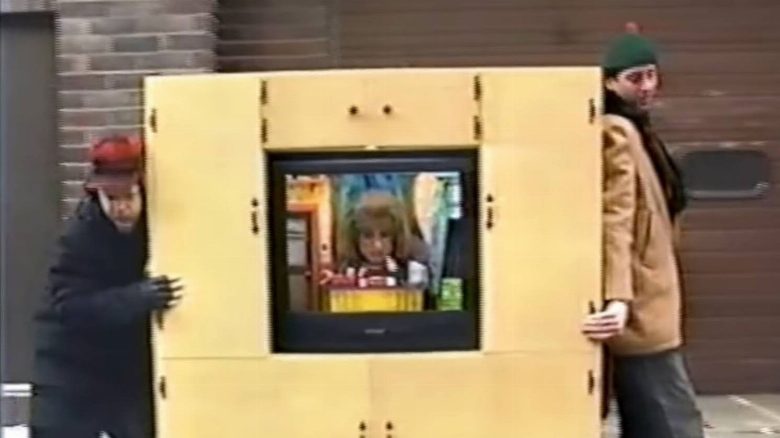
It's December 31st 6:00 Am at Weinerville, by midnight it'll be New Year's Day. The way for the Weinerville gang to celebrate it is by going to New York City to throw a party for all of the kids that live there. Marc, Boney, Captain Bob, Louie, Pops, and Socko get inside Marc's van for a road trip to the Big Apple. Dottie and Zip who remain in town were looking forward to some peace and quiet, until Cocktail Frank tells Dotty that the bands that were going to be there just withdrew from attending. Dotty tells Zip to stop the van from leaving so that Dotty, Cocktail Frank, and Zip can tell them what happens and have the three of them come along as the substitute band or there won't be a party. Zip was unsuccessful in stopping the van. Now Dotty and Zip must find another way to get in touch with the gang who are now separated from each other and lost in the Big Apple.
Capturing the frantic energy of mid-nineties children television, The Weinerville New Year's Special: Lost in the Big Apple serves as a peculiar time capsule of an era when puppet-led variety shows dominated the airwaves. While modern audiences raised on the sleek, high-budget animation of today might find the low-tech charm of Marc Weiner and his motley crew of puppets quaint, this special represents a fascinating pivot point for the genre. By transplanting the established chaos of the Weinerville universe into the concrete jungle of New York City, director Scott Preston attempts to scale up the stakes, turning a localized puppet show into an urban scavenger hunt. It is a stylistic departure that mirrors how many regional Indian industries, such as the Telugu or Tamil film sectors, often use travel narratives to freshen up long-running franchise characters.
The plot hinges on a classic high-stakes misunderstanding, where the primary cast embarks on a celebratory road trip only to realize they have left behind the musical talent necessary for their party. The ensuing comedy of errors, featuring a cameo from the iconic Melissa Joan Hart, leans heavily into the slapstick sensibilities that defined the show. For viewers who grew up during this period, the special operates on pure nostalgia, offering a glimpse into a time when interactive television felt both accessible and slightly unhinged. The juxtaposition of human actors interacting with various puppet personas remains the film’s strongest hook, maintaining a theatrical quality that feels distinctly reminiscent of old-school variety programs.
This production is best suited for those who appreciate the campy, experimental spirit of nineties family entertainment. It does not aim for the polished narrative arcs of modern features, but instead prioritizes episodic humor and the sheer force of personality provided by the ensemble. Marc Weiner’s ability to anchor such a bizarre premise with genuine enthusiasm is what keeps the project from feeling entirely disjointed. While it certainly lacks the grandeur of contemporary blockbusters, the film remains a curiosity for students of television history and anyone interested in the transition of variety performers into long-form narrative formats. It stands as a testament to a specific, bygone style of children programming that prioritized creative invention over sophisticated digital effects, capturing a uniquely chaotic New York City through the eyes of a cast that was never meant to leave its home studio.