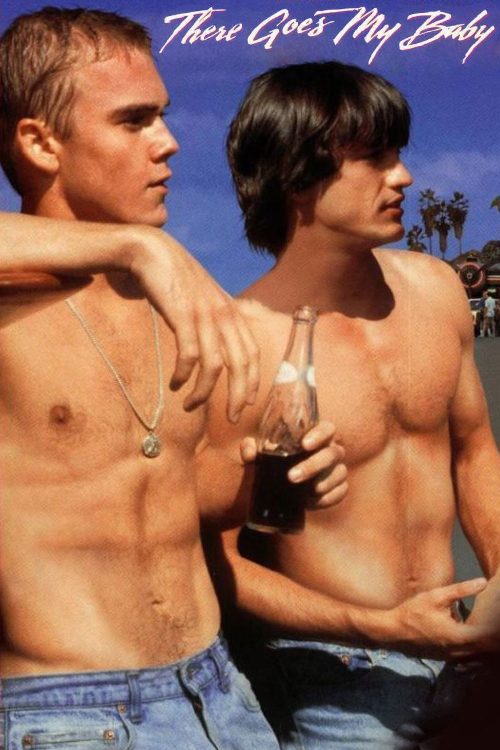
About There Goes My Baby
It's the summer of 1965, and the members of the graduating class of upscale Westwood High are eager to reinvent themselves. Valedictorian Mary Beth wants to attend a liberal university. Surfer bum Stick plans to enlist to fight in Vietnam. Calvin lives in the poor Watts section of Los Angeles, which is slowly erupting in violence. As the summer nights grow long, they'll all be forced to make decisions that will affect the rest of their lives.
The year 1994 brought us a poignant look back at the shifting tides of the mid-sixties, capturing a specific American restlessness that feels strangely resonant even for modern audiences accustomed to the high-stakes dramas of contemporary global cinema. There Goes My Baby serves as a melancholic time capsule, focusing on the precarious transition from teenage idealism to the harsh realities of adulthood during a summer defined by both cultural upheaval and personal uncertainty. While Indian cinema often explores the weight of familial expectations and societal duty through grand emotional narratives, this film adopts a quieter, observational approach, mirroring the ensemble-driven storytelling found in coming-of-age classics. By juxtaposing the sheltered aspirations of affluent students with the stark, brewing unrest in Watts, the narrative highlights the divide between those who can afford to dream and those caught in the immediate crosshairs of a changing nation.
The film relies heavily on the chemistry of its young cast, featuring performances from actors like Rick Schroder, Dermot Mulroney, and Noah Wyle, all of whom were establishing their presence in Hollywood at the time. Their portrayals ground the story in a sense of authentic longing, making the impending transition into the Vietnam War era feel like a closing door rather than a new beginning. Viewers who appreciate films that emphasize character-driven development over explosive plot twists will likely find much to admire here. It is a work for those who enjoy the slow-burn intensity of youth dramas, where the tension arises not from a singular villain, but from the inevitable passage of time and the difficult choices that accompany the end of high school.
Director Joe湯n Cohen crafts a visual landscape that feels deeply rooted in its period, avoiding the trap of mere nostalgia to instead focus on the friction between personal ambition and historical inevitability. For followers of cinema who track the evolution of the teen drama genre, this film acts as a bridge between the innocent high school narratives of the fifties and the more cynical, politically charged storytelling that followed. It stands as a reminder of how effectively film can document the loss of innocence on both a micro and macro scale. Whether one is a dedicated fan of American independent cinema or a student of how different industries portray the universal struggle of finding one’s place in the world, this title offers a thoughtful perspective on a generation standing on the precipice of a permanent shift.
Cast(24)