About Three Men for Vilma
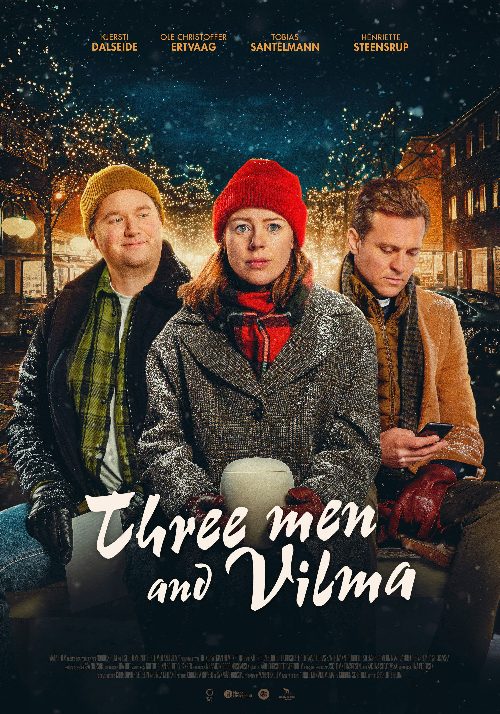
35-year-old teacher Vilma Veierød lives alone. She shuns social media and worries too much - most of all about death. One day in December, the handsome priest Ivar and the pathologist Robert with Tourette's suddenly appear on her doorstep with a letter and the news that her father has died. Vilma didn't even know she had a father, and the letter turns her whole life upside down. Vilma's life has not been full of people. Not by a long shot. But now she suddenly must deal with two men. Three - if you count her dead father.
Scandinavian cinema has long mastered the art of balancing melancholic introspection with sharp, observational humor, and Three Men for Vilma represents a quintessential example of this regional charm. The narrative centers on a woman whose existence is defined by solitude and a profound preoccupation with mortality, creating a character study that feels both intimate and relatable. When an unexpected inheritance and the arrival of two strangers shatter her carefully curated isolation, the film shifts from a quiet character portrait into a complex exploration of human connection. For viewers accustomed to the high-octane narratives often found in mainstream Indian cinema, this Norwegian production offers a refreshing change of pace, stripping away the spectacle to focus entirely on the nuances of interpersonal baggage and the absurdity of sudden life transitions.
The film stands out primarily through its distinct tonal management, navigating the heavy themes of grief and familial estrangement through a comedic lens that never trivializes the subject matter. Much like the best examples of contemporary indie dramedies, the story relies heavily on the chemistry between the leads to ground its premise. Ingvild Holthe Bygdnes delivers a performance that perfectly captures the internal friction of a character forced to confront her past after decades of social withdrawal. Director Charlotte Blom excels at building tension through awkward interactions, ensuring that the presence of the priest and the pathologist serves as both a catalyst for plot progression and a mirror for the protagonist’s hidden anxieties. It is a thoughtful look at how we construct our own barriers and the inevitable messiness that ensues when those walls are breached by the outside world.
Audiences who gravitate toward character-driven narratives, particularly those who enjoy the intricate pacing of Malayalam cinema’s more grounded offerings, will likely find much to appreciate in this story. It does not lean on grand gestures or sweeping action sequences; instead, it finds its strength in quiet dialogue and the comedic potential of uncomfortable situations. By focusing on the emotional weight of a long-buried secret, the film invites the viewer to reflect on their own relationships with the figures who define their histories. It is a sophisticated piece of storytelling that rewards patience, positioning itself as a must-watch for those who prefer their dramas with a side of dry wit and a deep, humanistic core. As it explores the intersection of legacy and personal identity, the film lingers in the mind long after the final frame.
Cast(11)