About Till Death Us Do Part
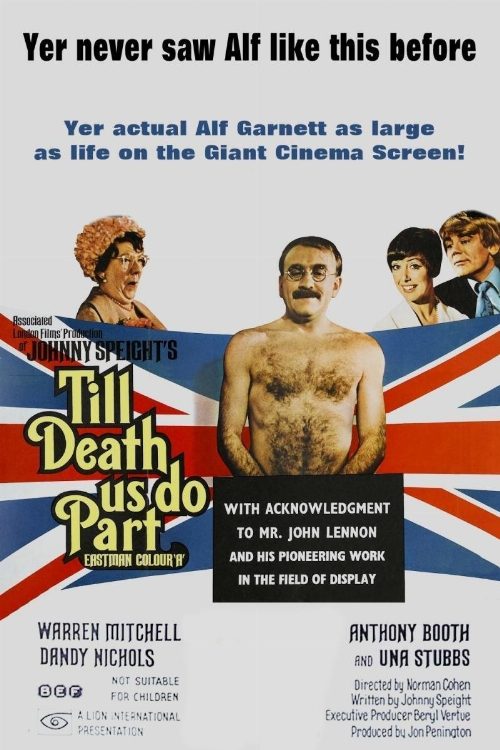
Based on the hit sitcom of the same name; racist, anti-Socialist Tory Alf Garnett and his long-suffering wife Else raise their daughter Rita during the Blitz.
Stepping away from the polished veneer of modern period pieces, the 1969 feature film Till Death Us Do Part offers a raw and deliberately abrasive look at the domestic friction of the British working class. While contemporary audiences might be accustomed to the sanitized nostalgia often found in historical dramas, this comedy opts for a far more confrontational approach. By transplanting the volatile energy of its television source material onto the big screen, the film explores the clash between rigid generational ideologies and the chaotic reality of life during the Blitz. The narrative centers on the abrasive Alf Garnett, a man whose inflammatory political stances and stubborn adherence to outdated social hierarchies serve as the primary catalyst for the household tension. This character study is less about providing a comforting trip down memory lane and more about exposing the deep-seated prejudices that simmered beneath the surface of mid-century British society.
For viewers interested in how media reflects the shifting cultural landscape of the late sixties, this film serves as a fascinating time capsule. It captures a specific moment when British cinema was beginning to grapple with more honest, albeit uncomfortable, portrayals of family dysfunction. The performances by Michael Robbins and Pat Coombs are central to this dynamic, as they anchor the absurdity of their constant bickering with a sense of lived-in exhaustion that feels remarkably authentic. Fans of character-driven comedies who appreciate dry wit and cynical commentary will find much to dissect here. It is a stark departure from the polished studio projects of the era, standing instead as a gritty exploration of a marriage held together by habit, spite, and the inescapable pressures of living through a wartime landscape.
The film is essential viewing for those who track the evolution of the sitcom-to-cinema pipeline, a format that remains a staple in global industries, including the diverse film markets of India. Much like how modern regional cinema uses domestic settings to mirror broader national anxieties, this movie uses the claustrophobia of a family home to comment on the state of the nation. It does not shy away from the unpleasant traits of its protagonist, forcing the audience to sit with the consequences of his rhetoric. Whether one views it as a period piece or a social experiment in comedic timing, the project remains a significant artifact of British comedy. It appeals to those who prefer their humor with a sharp, jagged edge, providing a stark reminder that some family dynamics are truly timeless in their intensity.
Cast(17)